Mushroom Strains and Species: The Full Mushly List

This page lists all the mushroom strains and species pages in the Mushly library. Psilocybe cubensis trade names like Golden Teacher sit next to real species like Lion's Mane and Shiitake, and each page says which is which. Use the Cubensis, Edible and Medical filters, or open a category page below.

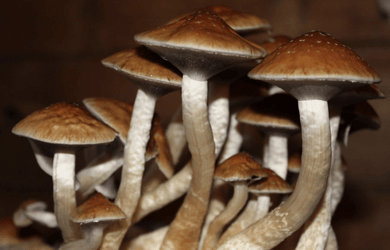
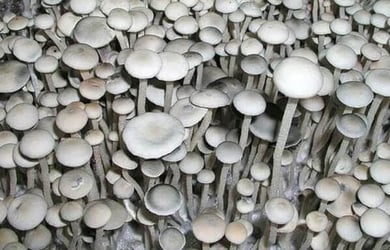
Golden Teacher Spores (Psilocybe cubensis): Microscopy, Size and Origins

Golden Teacher is a catalogue name for Psilocybe cubensis, not a published species. A microscope can match spores to the species. It cannot prove the trade name.

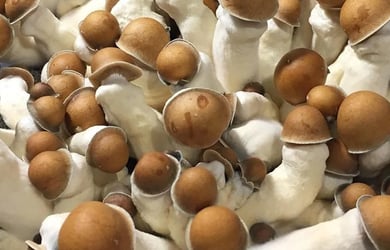
Penis Envy Mushrooms (Psilocybe cubensis): Taxonomy, Spores and Origin Lore

Penis Envy is a trade and community name for a selected lineage of Psilocybe cubensis (Earle) Singer. It is not a separate species. Under a microscope, a Penis Envy sample shows the spore characters of P. cubensis, and the label records where the sample came from, not a separate identity.

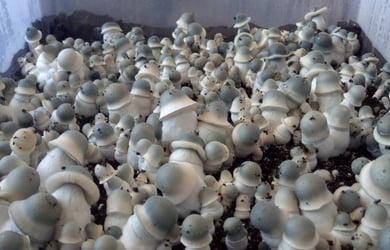
Albino Penis Envy (Psilocybe cubensis): Taxonomy, Pale Spores and Origin

Albino Penis Envy (APE) is a trade and community name for a pale, albino-type lineage of Psilocybe cubensis (Earle) Singer. It is not a separate species or a formal variety. Under a microscope an APE sample shows the spore characters of the species, often with a faint, pale or nearly invisible deposit, and the label records provenance, not a separate identity.

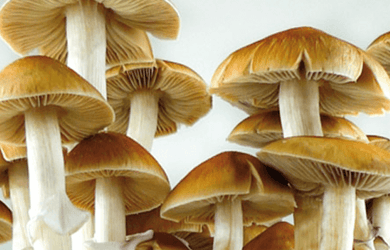
B+ Mushrooms (Psilocybe cubensis): Origin Lore, the Hybrid Myth and Spore Traits

B+ (also written "B Plus") is an informal collector name for one line of Psilocybe cubensis (Earle) Singer. It is not a separate species. It is commonly credited to a vendor known as "Mr. G," and a story that it is a cubensis × P. azurescens hybrid circulates widely, but no published evidence supports that. Under a microscope a B+ sample shows ordinary P. cubensis spores.

Blue Meanie (Psilocybe cubensis): A Trade Name With Two Meanings

Blue Meanie, as Mushly sells it, is a trade name for material sold as Psilocybe cubensis (Earle) Singer. It is not a separate species, a published variety, or a recognised variant. "Blue meanie" is also a nickname for a different fungus, Panaeolus cyanescens, and sources say the name began with that species and was later borrowed for a cubensis line. The two have different spore prints (black for Panaeolus, purple-brown for P. cubensis). No collector, date or specimen is published for the cubensis line, and sellers give conflicting origin stories.

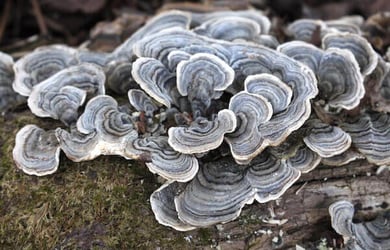
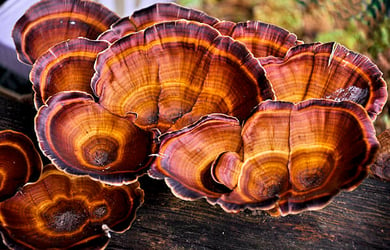
Turkey Tail (Trametes versicolor): Taxonomy, Spores and Look-alikes

Turkey tail is Trametes versicolor (L.) Lloyd, a common, worldwide bracket fungus (Polyporaceae) that rots dead hardwood. Its smooth, slightly curved, cylindrical spores are tiny, about 4-6 × 1.5-2.5 µm, and print white. It is also widely known by an older name, Coriolus versicolor, which is the name most of the medical literature still uses.

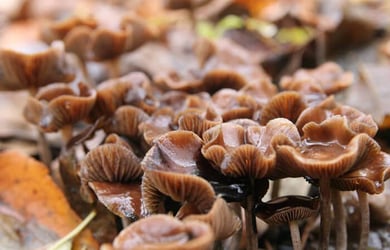
Wavy Cap (Psilocybe cyanescens): Taxonomy, Spores and Type History

Psilocybe cyanescens Wakef., the wavy cap (in the UK, the blueleg brownie), is a true species, not a Psilocybe cubensis strain. It grows on wood chips, not dung, and is recorded in Index Fungorum as RecordID 290108. Its smooth, ellipsoid spores support a species-level note under a microscope, but they overlap with close relatives, so cap, habitat and provenance matter as much as the slide.

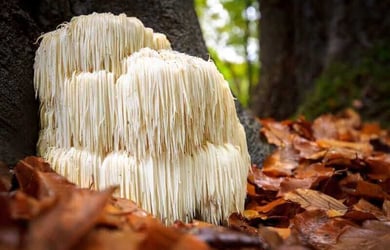
Lions Mane (Hericium erinaceus): Taxonomy, Spore Traits and Look-alikes

On the Mushly hub, Lions Mane is the common name paired with Hericium erinaceus. It is not a Psilocybe cubensis catalogue strain, and it is not another Hericium. Index Fungorum 356812 and NCBI Taxonomy 91752 give the current name Hericium erinaceus (Bull.) Pers., in the family Hericiaceae. Index Fungorum states 1797. The NCBI current-name line states no year. NCBI lists three common names. Index Fungorum lists none. The basionym on both is Hydnum erinaceus Bull., 1781.

Reishi (Ganoderma lucidum and relatives): Name, Family, Spore Data and Look-alikes

"Reishi" is a common name, not a species. On the Mushly hub it is paired with Ganoderma lucidum (Curtis) P. Karst., the name Index Fungorum currently accepts, but the same word is also used for Ganoderma sichuanense (also sold as G. lingzhi) and for other laccate (glossy-capped) Ganoderma. Recent work treats G. lucidum and G. sichuanense as different species, so a product labelled "reishi" may not be G. lucidum. Sources also disagree on the family (Polyporaceae or Ganodermataceae) and on spore size, and part of that disagreement is because they describe different species.

Browse by category

  • Psilocybe Cubensis Strains covers Golden Teacher, B+, Penis Envy and the other cubensis trade names, plus related Psilocybe and Panaeolus species. Psilocybe pages are for microscopy and identification only.
  • Edible Mushroom Species covers Shiitake, Maitake, Oyster, Chanterelle, Button, Cremini and Portobello.
  • Medicinal Mushroom Species covers Lion's Mane, Reishi, Turkey Tail and Cordyceps.

Strain or species?

A species has a formal scientific name, such as Psilocybe cubensis or Hericium erinaceus. A strain is an informal name for one line of a species. Golden Teacher, B+ and Penis Envy are all strains of P. cubensis. Edible and medicinal mushrooms are usually sold by species, but one market name can cover more than one species: "reishi" and "chestnut mushroom" are examples.

What each strain page covers

  • The accepted scientific name and family, with database records where they exist
  • Where the name came from, and which origin claims are sourced and which are vendor lore
  • Spore print colour and spore size, with the source
  • Look-alikes, and what a microscope can and cannot confirm

Most-viewed strain pages

Golden Teacher · Penis Envy · Albino Penis Envy · B+ · Blue Meanie · Wavy Cap · Lion's Mane · Reishi · Turkey Tail

For microscopy buyers

To order Psilocybe spores for microscopy, see Spore Syringes or Spore Prints. For formats and legal basics, read Mushroom Spores for Microscopy. Laws differ by country and U.S. state, and California, Florida, Georgia and Idaho restrict spores (see the USA & Canada guide). Check your local laws before ordering.

Most-viewed strains at a glance

NameSpecies / typeNoteLink
Golden TeacherP. cubensis trade nameA microscope can match the species, not the trade name./golden-teacher
Penis EnvyP. cubensis trade/community nameSelected lineage. It is not a separate species./penis-envy
Albino Penis EnvyP. cubensis (albino-type)Often leaves a faint or pale spore deposit./albino-penis-envy
Blue MeanieP. cubensis trade nameAlso a nickname for Panaeolus cyanescens./blue-meanie
B+P. cubensis collector nameOften called a hybrid, but that claim is a myth./b-plus
Wavy CapPsilocybe cyanescensA true species that grows on wood chips./wavy-cap
Lion's ManeHericium erinaceusMedicinal category. White print./lions-mane
ReishiGanoderma lucidum and relativesA common name for several Ganoderma species./reishi
Turkey TailTrametes versicolorWhite print. Tiny spores (about 4–6 × 1.5–2.5 µm)./turkey-tail

Frequently Asked Questions

What is the difference between a mushroom strain and a species?

A species has a formal scientific name. A strain is an informal name for one line within a species. Golden Teacher, for example, is a strain of Psilocybe cubensis.

Where do I find all Psilocybe cubensis strains?

On the Psilocybe Cubensis Strains page, which lists every cubensis name in the library A–Z.

Can a microscope identify a mushroom strain?

It can confirm the species from spore traits. It cannot confirm a strain name, because lines of the same species have overlapping spores.

Do Psilocybe spores contain psilocybin?

No. Spores do not contain psilocybin or psilocin, but some places restrict them anyway. Mushly sells them for microscopy only.