

Medicinal Mushroom Species: Lion's Mane, Reishi, Turkey Tail and Cordyceps
These are the medicinal mushroom species and functional mushroom species in Mushly's library: Lion's Mane, Reishi, Cordyceps, Turkey Tail and Oyster. Each page gives the accepted scientific name, spore traits and look-alikes, and notes where one common name is used for more than one species. This is identification information, not medical advice.
All Strains
Edible
Medical
Cubensis



What "medicinal mushroom" means here
"Medicinal" or "functional" mushroom is a market label, not a scientific group. It covers species with a long history of traditional use in East Asia that are now studied in the lab. The U.S. National Cancer Institute notes that more than 100 species are used in Asia. Mushly lists the species, not the claims. Research on these fungi is ongoing, and a supplement label is not proof of what a study found.
One common name, several species
Most problems with these mushrooms start with the name:
- Reishi is used for Ganoderma lucidum, G. sichuanense (sold as G. lingzhi) and other glossy Ganoderma, so a "reishi" label may not be G. lucidum.
- Cordyceps can mean Cordyceps militaris (orange clubs that grow from insect pupae) or Ophiocordyceps sinensis, which was moved to a different genus in 2007.
- Turkey Tail is Trametes versicolor, but much of the medical literature still uses the older name Coriolus versicolor.
- Oyster covers several Pleurotus species, and a microscope cannot reliably separate P. ostreatus from its close relatives.
- Lion's Mane is Hericium erinaceus. Other Hericium species look similar.
Spore prints and quick ID checks
- Lion's Mane: white print. It has hanging spines instead of gills.
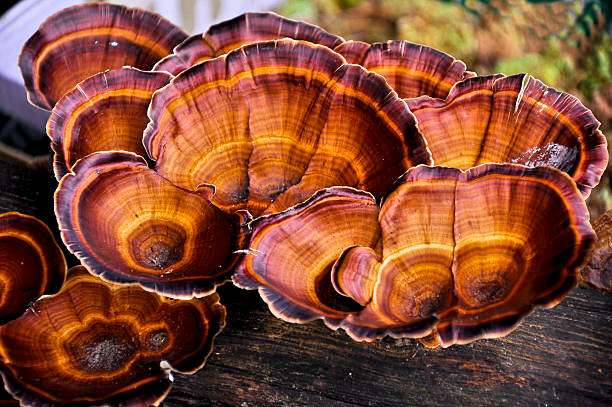
- Reishi: brown print. The cap surface is shiny and lacquered.
- Turkey Tail: white print, tiny spores (about 4–6 × 1.5–2.5 µm). It has a pored underside and grows as thin, banded brackets on dead hardwood.
- Oyster: white to lilac-grey print, with gills running down a short stem.
- Cordyceps militaris: an ascomycete (family Cordycipitaceae) that forms spores in sacs, not on gills. Its fruiting body is an orange club.
What research has looked at (no health claims)
Reishi and turkey tail have both been reviewed in the National Cancer Institute's PDQ summary on medicinal mushrooms. Lion's Mane has been studied in the lab for compounds called hericenones and erinacines. Cordyceps militaris has been studied for cordycepin. These are research topics, not proven treatments. Speak to a doctor before using any mushroom product for a health reason.
Related pages
- For culinary species, including Oyster, see Edible Mushroom Species.
- See every species and strain at All Strains.
- Compare two species side by side with Strain vs Strain.
Medicinal species at a glance
| Name | Species | Note | Link |
|---|---|---|---|
| Lion's Mane | Hericium erinaceus (Hericiaceae) | White print. Spines, not gills. | /lions-mane |
| Reishi | Ganoderma lucidum and relatives | "Reishi" is used for several Ganoderma species. Brown print. | /reishi |
| Cordyceps | Cordyceps militaris (Cordycipitaceae) | Orange clubs that grow from insect pupae. Not the same as Ophiocordyceps sinensis. | /cordyceps |
| Turkey Tail | Trametes versicolor (syn. Coriolus versicolor) | White print. Spores about 4–6 × 1.5–2.5 µm. | /turkey-tail |
| Oyster Mushroom | Pleurotus ostreatus (Pleurotaceae) | White to lilac-grey print. "Oyster" is used for several Pleurotus species. | /oyster-mushrooms |
Frequently Asked Questions
What are the main medicinal mushroom species?
The species most often sold as medicinal or functional mushrooms include Lion's Mane (Hericium erinaceus), Reishi (Ganoderma lucidum and relatives), Turkey Tail (Trametes versicolor) and Cordyceps (Cordyceps militaris). Each has its own page here.
Are functional mushrooms legal?
These five species do not contain psilocybin, and in many countries they are sold as foods or supplements. Rules on supplements and on health claims differ by country, so check local rules.
Is reishi one species?
No. "Reishi" is used for Ganoderma lucidum, G. sichuanense (G. lingzhi) and other glossy Ganoderma, and recent work treats these as different species.
What is the difference between Cordyceps militaris and Cordyceps sinensis?
They are different species. C. sinensis was moved to the genus Ophiocordyceps in 2007. C. militaris is the type species of Cordyceps and forms orange club-shaped fruiting bodies.
Do medicinal mushrooms cure anything?
Mushly does not make health claims. Some of these species have been studied in labs and clinical trials, but a study is not proof that a product works. Ask a doctor before using any mushroom product for a health reason.