Edible Fungi: A Comprehensive Strain Guide

Exploring Flavor, Nutrition, and Mycology

Discover the vast world of edible fungi with Mushly’s expert-curated guides. We analyze the most popular edible strains, breaking down their morphological traits, health benefits, and culinary versatility.
  • Nutritional Profiles: Understand the antioxidants and vitamins found in premium edible species.
  • Selection & Storage: Professional tips on maintaining the integrity of your harvest.
  • Culinary Application: How to leverage the unique textures and 'umami' of mushrooms in professional cooking.

Expand your mycological library with the world’s most delicious research subjects.

All Strains

Edible

Medical

Cubensis

Shiitake (Lentinula edodes): Taxonomy, Spore Traits and Naming History

Shiitake is the common name of Lentinula edodes (Berk.) Pegler, a real, formally named species and not a Psilocybe cubensis strain or trade name. It is a wood-decay fungus native to East Asia and widely cultivated elsewhere. Its spores are white, smooth and ellipsoid. Sources disagree on its family, because older books place it in Tricholomataceae or Marasmiaceae and current references use Omphalotaceae. Mushly does not currently list a dedicated Shiitake product.

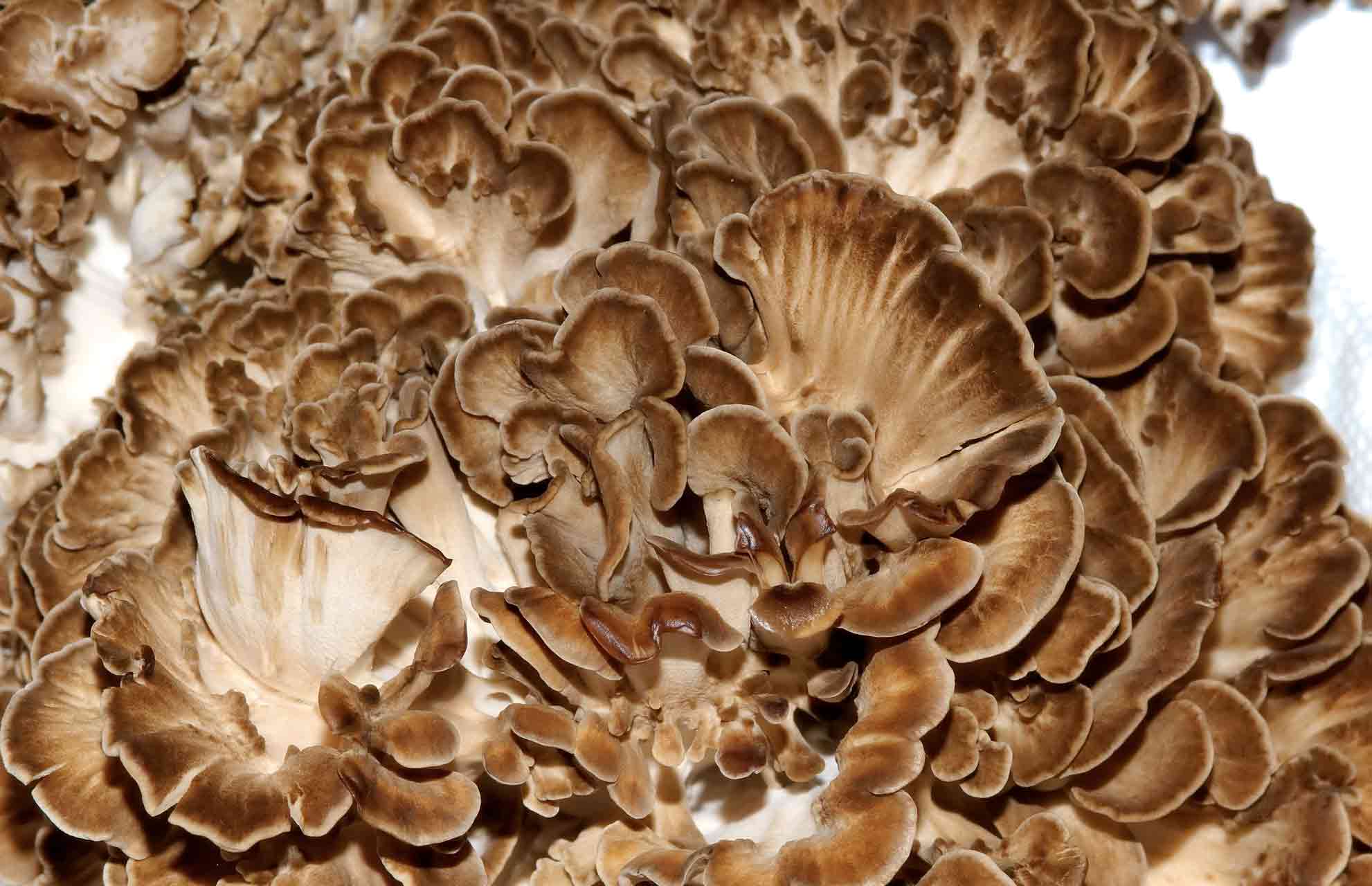
Maitake (Grifola frondosa): Taxonomy, Family, Spore Data and Look-alikes

Maitake (also hen-of-the-woods, sheep head or ram head) is a common name for Grifola frondosa (Dicks.) Gray (1821), a polypore that forms large clustered fronds at the base of trees. It is a formally named species and not a Psilocybe cubensis strain. Sources disagree on the family, with Species Fungorum, Wikipedia and MushroomExpert using Grifolaceae and First Nature using Meripilaceae. Published spore figures are small, smooth and ellipsoid, roughly 4-7 × 3-5 µm across two general references.

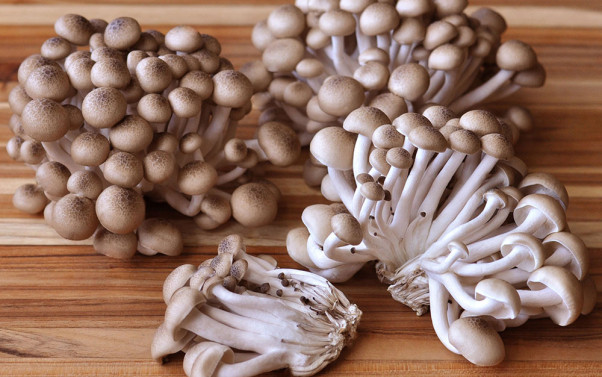
Shimeji Mushroom (Hypsizygus): Name Confusion, Family, Spore Data and Look-alikes

Shimeji is a market name, and the species behind it depends on which shimeji is meant. The common brown and white clusters sold as buna-shimeji (beech mushroom) belong to Hypsizygus tessulatus, a name that appears as both tessulatus and tessellatus and has H. marmoreus as a synonym or a separate species, depending on the source. Hon-shimeji is a different fungus in a different genus, Lyophyllum shimeji. All of these are formally named species and not Psilocybe cubensis strains. Sources agree on the family, Lyophyllaceae. Published spore figures are small and nearly round, about 4-5 µm in one general reference.

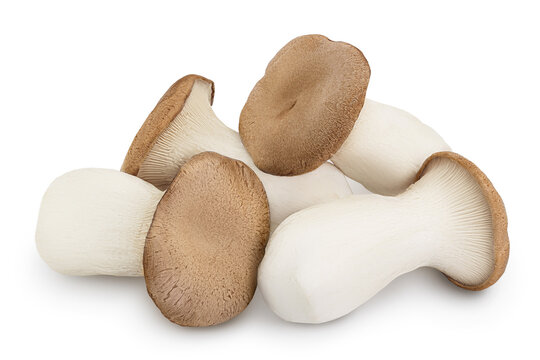
King Oyster Mushroom (Pleurotus eryngii): Taxonomy, Varieties, Spore Data and Look-alikes

King oyster (also king trumpet, king brown, French horn mushroom or eryngii) is a common name for Pleurotus eryngii (DC.) Quél. (1872), a species in the family Pleurotaceae. It is a formally named species and not a Psilocybe cubensis strain. Species Fungorum lists several varieties under the name, each tied to a different host plant in the carrot family, so the label can cover more than one entity. Published spore figures are around 10-12.5 × 4.5-5.5 µm in one regional species sheet, smooth and colourless, which looks nothing like a Psilocybe spore.

Chanterelle (Cantharellus cibarius and relatives): Name, Family, Spore Data and Look-alikes

Chanterelle is a common name, and the species behind it depends on where you are. Cantharellus cibarius Fr. (1821), the yellow chanterelle or girolle, is the European species. Recent DNA work has shown that the golden chanterelles of North America are a group of related species, and C. cibarius in the strict sense is now restricted to Europe. Sources also disagree on the family (Hydnaceae or Cantharellaceae). It is a formally named species and not a Psilocybe cubensis strain.

Cremini Mushroom (Agaricus bisporus): Taxonomy, Spore Traits and Look-alikes

Cremini (also spelled crimini, and sold as baby bella) is a common name for the immature, brown form of Agaricus bisporus (J.E. Lange) Imbach. The same species is sold as a white button mushroom when young and white, and as portobello when mature, so these are stages and colour forms of one species and not separate species. It is a formally named species and not a Psilocybe cubensis strain. Its spores print dark brown and measure about 4.5-5.5 × 5-7.5 µm in one general reference, much smaller than those of P. cubensis.

Portobello Mushroom (Agaricus bisporus): Taxonomy, Spore Traits and Look-alikes

"Portobello" (also spelled portabella or portobella) is a common name for the mature, brown form of Agaricus bisporus (J.E. Lange) Imbach. The same species is sold as a button mushroom when young and white, and as cremini when young and brown, so these are stages and colour forms of one species and not separate species. It is a formally named species and not a Psilocybe cubensis strain. Its spores print dark brown and measure about 4.5-5.5 × 5-7.5 µm in one general reference, much smaller than those of P. cubensis.

Button Mushroom (Agaricus bisporus): Taxonomy, Spore Traits and Look-alikes

"Button mushroom" is a common name for the immature white form of Agaricus bisporus (J.E. Lange) Imbach, the most widely cultivated mushroom in the world. The same species is sold as cremini or chestnut mushroom when brown and immature, and as portobello when mature, so these are stages and colour forms of one species and not separate species. It is a formally named species and not a Psilocybe cubensis strain. Its spores are dark brown in print, and about 4.5-5.5 × 5-7.5 µm in one general reference, much smaller than those of P. cubensis. Mushly does not currently list a dedicated Button Mushroom product.

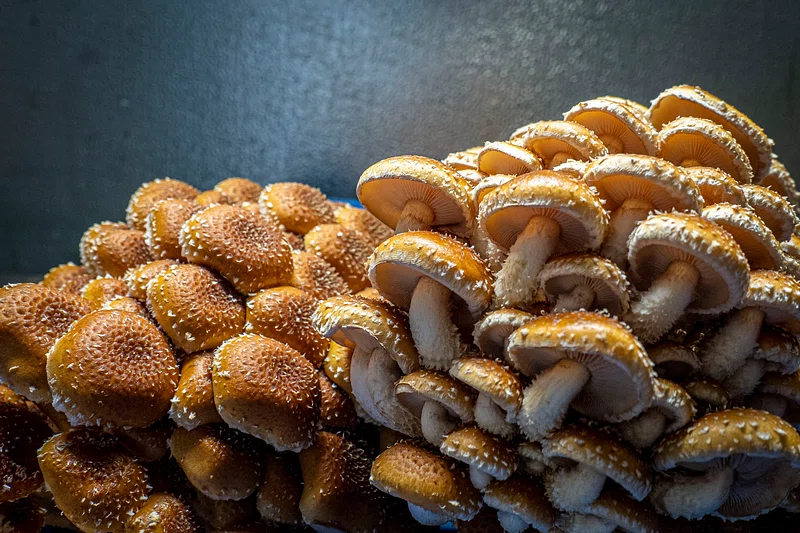
Chestnut Mushroom: Which Species? Pholiota adiposa and Agaricus bisporus

"Chestnut mushroom" is a common name, not a species, and it is used for different fungi. In culture and hobby listings it usually means Pholiota adiposa (Batsch) P. Kumm., a clustered wood-growing fungus in Strophariaceae. In shops, the same words are often used for brown, immature Agaricus bisporus, the species sold as cremini. The Wikipedia entry for A. bisporus says the chestnut name is "not to be confused with Pholiota adiposa." Neither is a Psilocybe cubensis strain. Mushly does not currently list a Chestnut product.

Oyster Mushroom (Pleurotus ostreatus): Taxonomy, Spore Traits and Look-alikes

Pleurotus ostreatus is the species usually called the oyster mushroom. It is a white-rot wood-decay fungus in the family Pleurotaceae, with smooth, cylindrical-ellipsoid spores and a white to lilac-grey spore print. "Oyster mushroom" is also a common name used for several related Pleurotus species, so a label saying "oyster" does not tell you which species you have. A microscope helps with the genus but cannot reliably separate P. ostreatus from its close relatives.