

About Liberty Cap (Psilocybe semilanceata): Name, Family and Look-alikes Mushrooms
Updated: October 4, 2026
This page on the liberty cap is a species reference for microscopy and taxonomy. It is not a foraging guide and does not support finding, growing, or taking mushrooms. Never eat a wild fungus on the strength of an online description.
Short answer: Liberty Cap is the common name of Psilocybe semilanceata (Fr.) P. Kumm., a real, formally named species and not a trade name. It differs from the cubensis lines Mushly lists in that it is a species with a published history, so the questions are about its family placement, its spore data and its look-alikes. Published sources disagree on its family and slightly on spore size. Mushly does not currently list a Liberty Cap product.
Home » Strain Encyclopedia » Other Psilocybe Species » Liberty Cap
In this guide
- What Liberty Cap is
- Taxonomy
- What sources agree on and where they differ
- Spore and cap traits
- Ecology
- Look-alikes
- Examining a slide
- Mushly products
- Legal note
- References
- FAQ
What Liberty Cap is
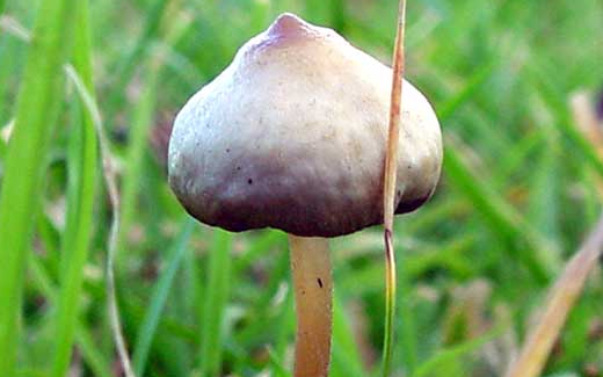
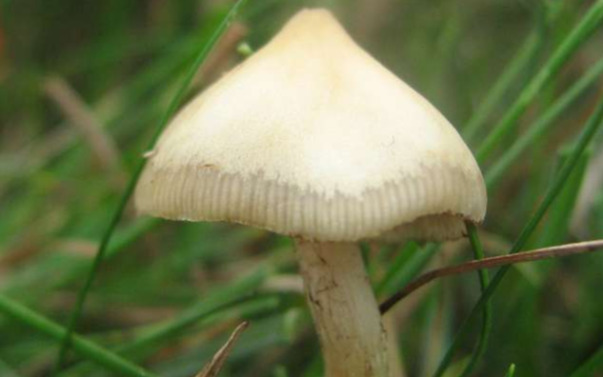
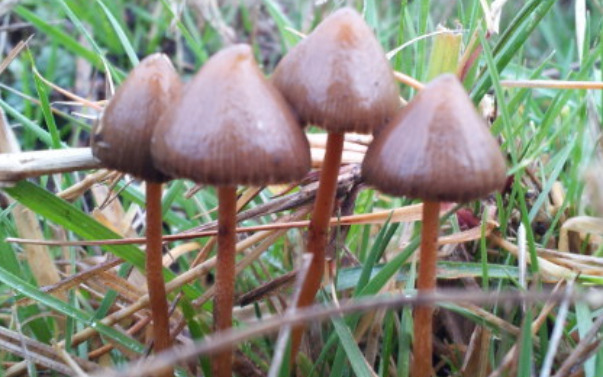
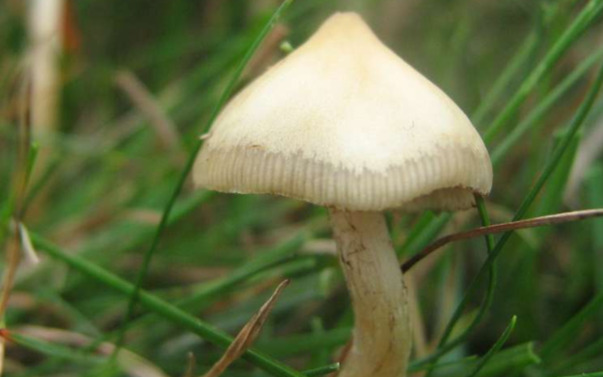
"Liberty Cap" is a common name for one species, Psilocybe semilanceata, named for its pointed, cap-like top. Unlike names such as Golden Teacher or Penis Envy, which are catalogue labels for P. cubensis, this name refers to a species described in the 19th century and recorded in the standard nomenclators. It grows in grassland, not on dung, and is a different species from P. cubensis and from the wavy-cap species P. cyanescens. See our Wavy Cap page for that species.
"Liberty Cap is the common name of Psilocybe semilanceata, a grassland species with a pointed cap. Current name, family, spore sizes and look-alikes."


Taxonomy
| Rank | Entry |
|---|---|
| Kingdom | Fungi |
| Phylum | Basidiomycota |
| Class | Agaricomycetes |
| Order | Agaricales |
| Family | Placement varies by source: Index Fungorum and NCBI list Agrocybaceae; Wikipedia, GBIF and iNaturalist use Hymenogastraceae; First Nature uses Strophariaceae |
| Genus | Psilocybe |
| Species | Psilocybe semilanceata (Fr.) P. Kumm., Führ. Pilzk. (Zerbst): 71 (1871) |
| Basionym | Agaricus semilanceatus Fr. (1818) |
| Common name | Liberty Cap |
Records: Index Fungorum 232492 and NCBI Taxonomy 181775. Wikipedia dates the basionym 1838 where Index Fungorum gives 1818, so cite the nomenclator record if you need the exact date. Family placement is an area where sources disagree, and this page does not call any of them wrong.
What sources agree on and where they differ
| Question | Status |
|---|---|
| Is Liberty Cap a formal species? | Yes. Psilocybe semilanceata has a published name and authority. |
| Which family? | Disputed across sources. See the taxonomy table. |
| Spore size | Published in field guides with slightly different ranges. See below. |
| Spore print colour | Dark purple-brown in all sources checked, described with different wording. |
| Habitat | Grassland, not dung. Sources agree. |
| Where it grows | Temperate regions, widely in the Northern Hemisphere, with scattered reports elsewhere. |
Spore and cap traits
Short answer: smooth, ellipsoid, dark purple-brown spores, with a pointed cap.
| Source | Spore size | Print colour |
|---|---|---|
| Wikipedia, citing Bas et al. (1995) | 10.5-15 × 6.5-8.5 µm, oblong in side view and oblong to oval in face view | "deep reddish purple-brown" |
| First Nature | "Ellipsoidal, smooth, 11.5-14.5 × 7-9 µm" | "Very dark purple-brown" |
Both are secondary sources, and the two ranges overlap but are not identical. A primary taxonomic treatment, such as Guzmán's monographs, would be the better citation. Measure your own sample, and record the mountant, since spores look different in water and in KOH.
The cap is the field character most often cited: a narrow, pointed, bell-shaped cap on a slender stem. It is also a character shared by other small grassland species, so it is not diagnostic on its own.
Ecology
P. semilanceata is saprobic and fruits in grassland, particularly in damper pastures, feeding on decaying grass roots. It is not found on dung, which separates it from many dung-loving species. First Nature describes summer and autumn fruiting in Britain and Ireland. The P. semilanceata species account on Wikipedia describes a wide distribution across temperate Northern Hemisphere regions.
Look-alikes
Several small brown grassland and lawn fungi resemble Liberty Cap, and some are dangerous. This list comes from published species accounts and is not an identification key:
- Other Psilocybe species: P. pelliculosa, P. strictipes, P. mexicana and P. samuiensis are listed as similar species.
- Inocybe geophylla: a toxic species that contains muscarine, listed as a confusion risk.
- Panaeolus semiovatus and Panaeolina foenisecii: commonly confused grassland species, usually larger and without a pointed cap.
- Galerina species: small brown woodland and grass-edge mushrooms, including the deadly Galerina marginata. A spore print and microscopy help, but should never be the only check.
Identification of wild fungi should never rest on one feature, and a deadly species can look like a harmless one. Do not eat any wild fungus on the strength of an online description.
Examining a slide
- Mount a spore deposit in water first, then in KOH, and record both.
- Measure at least 20 spores (length × width) and record the magnification.
- Note the shape in face and side view, the wall, and the germ pore.
- Record the print colour separately from the mountant colour.
- Remember the limit: a match to a published range supports a genus-level or species-level comparison, but it cannot, by itself, separate this species from look-alikes.
Mushly products
Mushly does not currently list a Liberty Cap syringe or print. This page is a reference note, and the species is a different one from the cubensis spores in our catalogue. To study related material, browse our spore syringes for microscopy or see the Wavy Cap page.
Legal note
Laws on psilocybin-containing fungi, including P. semilanceata, differ widely by country and region. For example, First Nature notes that in the United Kingdom fresh psilocybin mushrooms have been Class A since 2005. Check the law where you live. Mushly offers spores for microscopy, taxonomy and mycological research.
Browse spore syringes · Strain library · Mushroom spores for microscopy guide
References
- Index Fungorum 232492; NCBI Taxonomy 181775
- Wikipedia: Psilocybe semilanceata (spore data citing Bas et al. 1995; look-alikes; distribution)
- First Nature: Psilocybe semilanceata (spore data, habitat, UK legal note)


What is a Liberty Cap?