

About Chestnut Mushroom: Which Species? Pholiota adiposa and Agaricus bisporus Mushrooms
Updated: October 6, 2026
spores and cultures are sold for microscopy and research purposes. This page is a reference for observing a species. It is not a foraging guide and not medical advice.
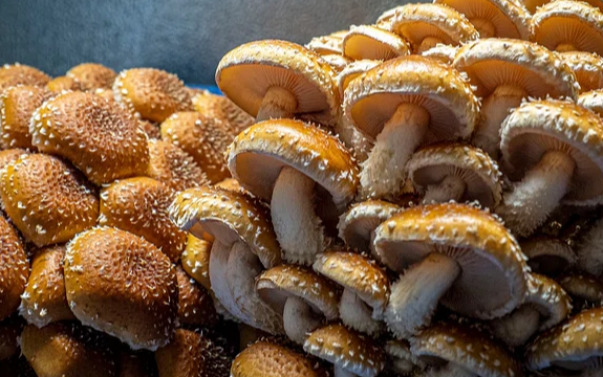
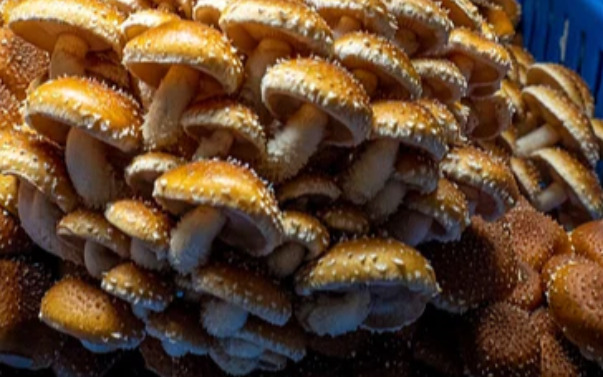
Short answer: "Chestnut mushroom" is a common name, not a species, and it is used for different fungi. In culture and hobby listings it usually means Pholiota adiposa (Batsch) P. Kumm., a clustered wood-growing fungus in Strophariaceae. In shops, the same words are often used for brown, immature Agaricus bisporus, the species sold as cremini. Wikipedia's A. bisporus entry says the chestnut name is "not to be confused with Pholiota adiposa." Neither is a Psilocybe Cubensis strain. Mushly does not currently list a Chestnut product.
Home » Strain Encyclopedia » Edible and Medicinal Species » Chestnut
In this guide
- What the name covers
- Taxonomy
- What sources agree on and where they differ
- Spore traits
- Ecology and distribution
- Look-alikes
- Examining a slide
- Mushly products
- Legal note
- References
- FAQ
What the name covers
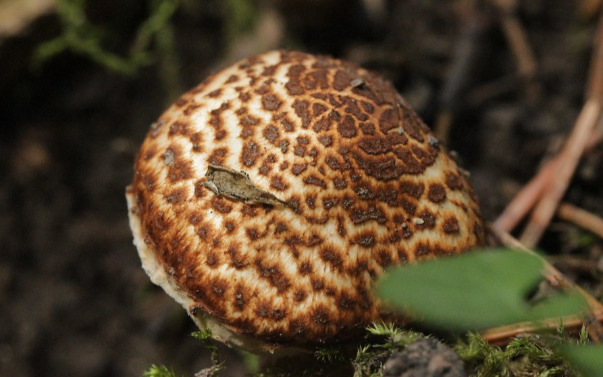
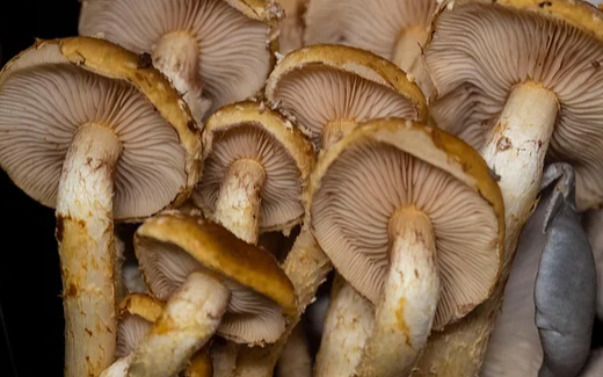
"Chestnut" is an informal English name, and at least three fungi have been linked to it.
- Pholiota adiposa: iNaturalist lists "Chestnut Mushroom" as its common name, and Small World Mycology sells it under "Kuritake, Brick Top, Cinnamon Cap, Chestnut Mushroom."
- Agaricus bisporus: Wikipedia says brown immature forms are sold as cremini, "chestnut mushroom (not to be confused with Pholiota adiposa)," and, when mature, portobello.
- Cyclocybe aegerita: Wikipedia gives other names for this species (poplar mushroom, velvet pioppini) and mentions "chestnut mushroom" only in a source citation, so we treat any link to it as unconfirmed.
Because one name covers different species, always check the scientific name on a label, culture or supplement. Those are different species in different families, so the page could not be right about both.
"Chestnut mushroom is a common name used for at least two different fungi: Pholiota adiposa and brown Agaricus bisporus. Naming, published spore data, look-alikes and what microscopy can show. Mushly lists no Chestnut product."

Taxonomy
This table covers Pholiota adiposa, the species this page is about.
| Rank | Entry |
|---|---|
| Kingdom | Fungi |
| Phylum | Basidiomycota |
| Class | Agaricomycetes |
| Order | Agaricales |
| Family | Strophariaceae |
| Genus | Pholiota |
| Species | Pholiota adiposa (Batsch) P. Kumm. (1871) |
| Basionym | Agaricus adiposus Batsch (1786), per Wikipedia and NCBI |
| Common names | Chestnut mushroom, kuritake, brick top, cinnamon cap |
Wikipedia lists the synonyms Dryophila adiposa (Batsch) Quél. (1886) and Hypodendrum adiposum (Batsch) Overh. (1932).
For comparison, Agaricus bisporus (J.E. Lange) Imbach (1946) has the basionym Psalliota hortensis f. bispora J.E. Lange (1926) and sits in Agaricaceae. The name "Chestnut" does not appear as a species name in the nomenclature databases we checked.
What sources agree on and where they differ
| Question | Status |
|---|---|
| Is Chestnut a formal species? | No. It is a common name. |
| What does it mean in hobby listings? | Usually Pholiota adiposa. |
| What does it mean in shops? | Often brown, immature Agaricus bisporus, per Wikipedia. |
| Is it a Psilocybe cubensis strain? | No. It is a different genus and family. |
| Basionym year of P. adiposa | 1786 per Wikipedia and NCBI. |
| Health benefits | Mushly makes no health, immune or medicinal claims. |
Spore traits
Short answer: the two main species differ clearly in spore size and print.
| Species | Spore size | Features | |
|---|---|---|---|
| Pholiota adiposa (Wikipedia) | about 7.5-9.5 × 5-6.3 µm | "ovoid to ellipsoid, smooth, brown colored" | brown |
| Agaricus bisporus (Wikipedia) | about 4.5-5.5 × 5-7.5 µm | usually two spores per basidium | dark brown |
These figures come from a general reference and not from a primary taxonomic treatment, so check a monograph before you cite sizes. The two species differ in spore size and in how many spores a basidium bears, so a slide should separate them even though both prints are brown. Neither looks like the smooth, truncate, purple-brown spores of P. cubensis. Measure your own sample and record the mountant.
Ecology and distribution
Wikipedia describes P. adiposa as growing "parasitically or saprotrophically, most often on beech," and also on poplar and willow, in North America, Europe and Asia, fruiting from about August to November. It adds that the species is edible and "regularly consumed in many parts of Asia." Agaricus bisporus is a cultivated species with a different life history. Mushly makes no growing, foraging or eating recommendations for either.
Look-alikes
Wikipedia places P. adiposa in a complex with Pholiota aurivella and Pholiota limonella, which it says can be told apart by "spore size or substrate," and notes that Pholiota squarrosoides is similar when young. For A. bisporus, Wikipedia warns about confusion with destroying angels (Amanita species) and with A. xanthodermus, which has a phenol-like odour and yellows when bruised. This is a reason to check the scientific name on any label, culture or wild specimen, and not an identification key. Identification of wild fungi should never rest on one feature, and nobody should eat a wild fungus on the strength of an online description.
Examining a slide
- Mount a spore deposit in water first, then in KOH, and record both. A brown print on white paper is the usual starting point.
- Measure at least 20 spores (length × width) and record the magnification.
- Note the shape and the wall, and whether basidia carry two or four spores if you can see them.
- Write down the exact label (Chestnut), the scientific name the supplier gives, and the date.
- Remember the limit: matching a published range supports a species-level comparison, but it cannot separate P. adiposa from the close Pholiota species in its complex on its own.
Mushly products
Mushly does not currently list a Chestnut syringe, print or culture. This page is a reference note and not a product page. To browse what Mushly does list, see the edible cultures category and the mushroom spores guide.
Legal note
Neither Pholiota adiposa nor Agaricus bisporus is a psilocybin-containing species. Laws on spores and cultures still differ by country and region, so check the rules where you live. Mushly's microscopy products are sold for research and study.
Edible cultures · Strain library · Mushroom spores for microscopy guide
References
- Wikipedia: Pholiota adiposa (authority, basionym, family, spores, habitat, edibility, look-alikes, synonyms)
- Wikipedia: Agaricus bisporus (authority, family, common names, spores, look-alikes)
- Wikipedia: Cyclocybe aegerita (common names; used only to separate it from the other two)
- iNaturalist: Pholiota adiposa (common name "Chestnut Mushroom")
- Small World Mycology: Chestnut (seller listing; common names only)




What is a chestnut mushroom?