

About King Oyster Mushroom (Pleurotus eryngii): Taxonomy, Varieties, Spore Data and Look-alikes Mushrooms
Updated: October 12, 2026
King Oyster mushroom spores and cultures are sold for microscopy and research purposes. This page is a reference for observing a species. It is not a foraging guide, a growing guide or medical advice.
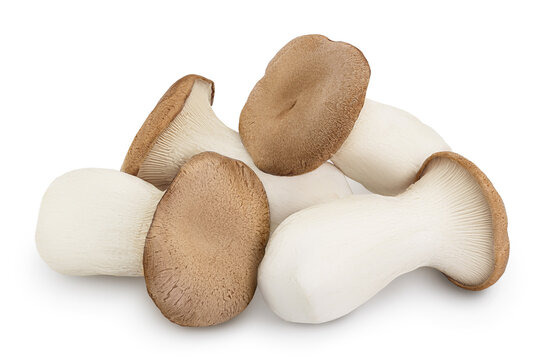
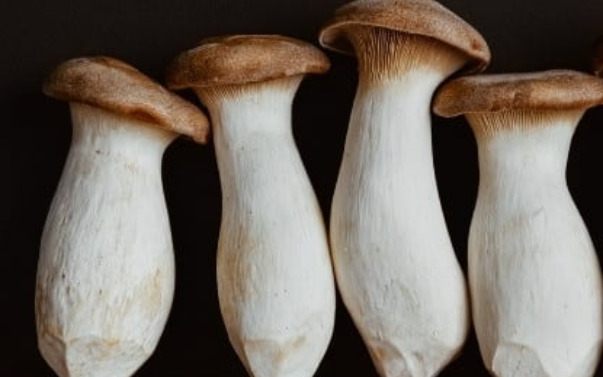
Short answer: King oyster (also king trumpet, king brown, French horn mushroom or eryngii) is a common name for Pleurotus eryngii (DC.) Quél. (1872), a species in the family Pleurotaceae. It is a formally named species and not a Psilocybe Cubensis strain. Species Fungorum lists several varieties under the name, each tied to a different host plant in the carrot family, so the label can cover more than one entity. Published spore figures are around 10-12.5 × 4.5-5.5 µm in one regional species sheet, smooth and colourless, which looks nothing like a Psilocybe spore.
Home » Strain Encyclopedia » Edible and Medicinal Species » King Oyster
In this guide
- What the name covers
- Taxonomy
- What sources agree on and where they differ
- Spore data
- Hosts, ecology and range
- Look-alikes
- Examining a slide
- Mushly products
- Legal note
- References
- FAQ
What the name covers
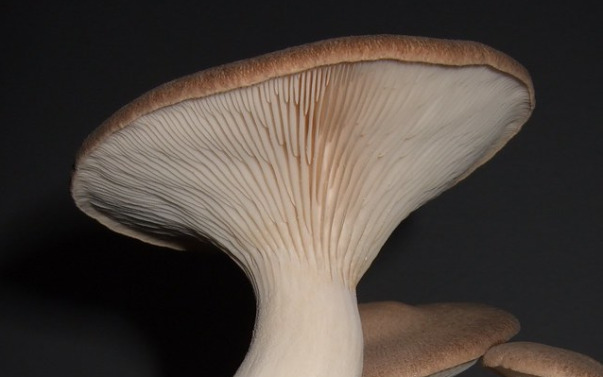
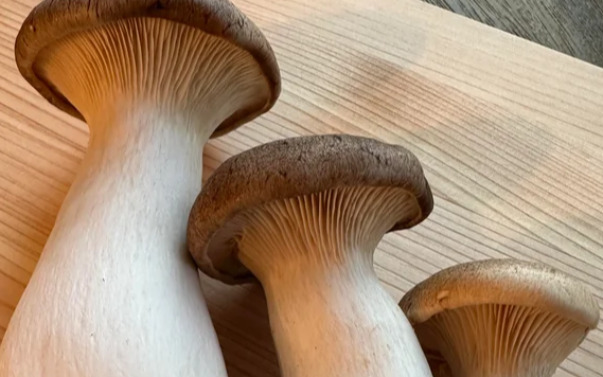
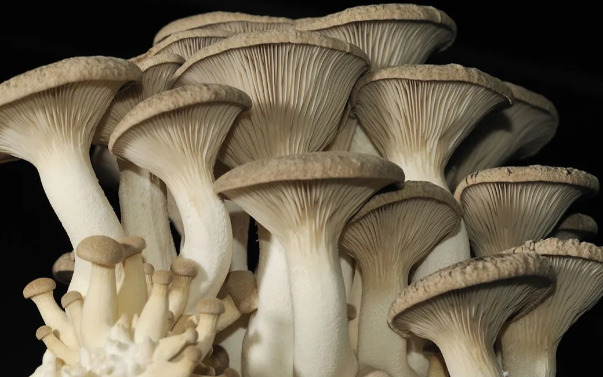
According to Wikipedia, P. eryngii is known as king oyster, king trumpet, king brown mushroom, French horn mushroom, eryngi, trumpet royale and aliʻi oyster. "Eryngii" comes from Eryngium (sea holly), the plant genus it is associated with. It is a relative of the common oyster mushroom (see our Oyster page), but it is a separate species, with a thick, meaty stem and a small cap.
"King oyster mushroom (king trumpet, eryngii) is Pleurotus eryngii, a named species with several varieties. Taxonomy, spore data, hosts and range."

Taxonomy
| Rank | Entry |
|---|---|
| Kingdom | Fungi |
| Phylum | Basidiomycota |
| Class | Agaricomycetes |
| Order | Agaricales |
| Family | Pleurotaceae |
| Genus | Pleurotus |
| Species | Pleurotus eryngii (DC.) Quél. (1872) |
| Common names | King oyster, king trumpet, king brown, French horn mushroom, eryngii |
Species record: Species Fungorum, record 170772, which shows the name as accepted, in Pleurotaceae. The record lists several infraspecific names, including varieties ferulae, elaeoselini, thapsiae, tingitanus, nebrodensis and tuoliensis, a subspecies tuoliensis and a form ferulae.
What sources agree on and where they differ
| Question | Status |
|---|---|
| Is it a Psilocybe cubensis strain? | No. It is a different genus and family, and it is not psychoactive. |
| Family | Pleurotaceae in Species Fungorum and Wikipedia. |
| One species or several? | Wikipedia describes a P. eryngii "complex" with varieties tied to different hosts. Species Fungorum lists many infraspecific names under one record. Wikipedia says P. nebrodensis is closely related to P. eryngii but distinct, while Species Fungorum also lists nebrodensis as a variety, so check which name a label uses. |
| Native range | Wikipedia gives the Atlantic coast through the Mediterranean basin, including North Africa, and Central Europe into western Asia and India. |
| Ecology | Saprotrophic, and a weak parasite on the roots of herbaceous plants in the carrot family (Wikipedia). |
| Health and nutrition | Mushly makes no nutritional or wellness claims. |
Spore data
Short answer: the figures below are general-reference values and not Mushly measurements.
| Source | Spores |
|---|---|
| Tanchaud, species sheet (French, 2026) | 10-12.5 × 4.5-5.5 µm. Shape and print colour not given. |
Spore size varies between sources and between the varieties, so treat this range as a starting point. A single species sheet is not a monograph, so check a primary treatment before citing it. Pleurotus spores are smooth and colourless in a mountant, unlike the dark, thick-walled spores of Psilocybe. For comparison, P. cubensis spores are measured at 11.5-17.3 × 8-11.5 × 7-9 µm in Singer and Smith (1958), with a truncate apex and germ pore. Measure your own sample and record the mountant.
Hosts, ecology and range
Wikipedia describes P. eryngii as associated with the roots of Eryngium species and other members of the carrot family (Apiaceae). It is saprotrophic and also a weak parasite on those roots, and Wikipedia adds that it is a nematode-trapping fungus. The varieties are tied to different hosts: eryngii to Eryngium, ferulae to Ferula communis, tingitanus to Ferula tingitana, elaeoselini to Elaeoselinum asclepium and thapsiae to Thapsia garganica.
The French species sheet gives a habitat of sea holly roots in dunes and calcareous meadows, well known on the coast and rare inland. So a king oyster in the wild is a host-linked fungus and not a general wood decomposer. Commercial king oyster is cultivated, and Mushly gives no growing advice.
Look-alikes
This is a taxonomy note, not an identification guide. Never eat a wild fungus on the strength of a web page.
- Pleurotus nebrodensis: Wikipedia says it is closely related to, but distinct from, P. eryngii. It is also listed as a variety in Species Fungorum, so the two names overlap.
- Pleurotus fossulatus: named by Wikipedia as a relative.
- Other oyster mushrooms: see our Oyster page. The common name "oyster" covers many species.
Examining a slide
Follow the general method in our mushroom spores guide, and then:
- Mount a spore deposit in water first, then in KOH, and record both. White prints look faint, so use dark paper or glass.
- Measure at least 20 spores (length × width) and record the magnification.
- Note the shape (elongated, ellipsoid) and the smooth surface.
- Record the print colour separately from the mountant colour.
- Remember the limit: a size match supports a comparison but does not separate P. eryngii from other Pleurotus species or its own varieties.
Mushly products
Mushly does not currently list a product named King Oyster. This page is a reference note and not a product page. To browse what Mushly does list, see the edible cultures category and the mushroom spores guide.
Legal note
Pleurotus eryngii is not a psilocybin-containing species and is legal to possess in most places, but laws on spores and cultures differ by country and region. Check the rules where you live. Mushly's microscopy products are sold for research and study and not for consumption or cultivation. Mushly gives no cooking, storage or nutrition advice.
Edible cultures · Strain library · Mushroom spores for microscopy guide
References
- Species Fungorum, Pleurotus eryngii (record 170772)
- Wikipedia: Pleurotus eryngii (authority, family, common names, hosts, range, varieties, relatives)
- Tanchaud, P. (2026), Pleurotus eryngii species sheet, Mycocharentes (French) (spores, habitat)
- Singer, R. & Smith, A.H. (1958), Mycologia 50 (P. cubensis range, for comparison only)


What is a king oyster mushroom?