

A wet mount starts drying the moment the coverslip goes down. Water evaporates from the edges, air creeps in from the sides, and within a few minutes spores near the rim may drift, clump or sit in a thin film that distorts their outline. Sealing coverslips is a simple protective barrier that stops this. This page explains when a sealed mount is worth the extra minute, the common sealants, and how to record what you did so your spore measurements stay comparable.
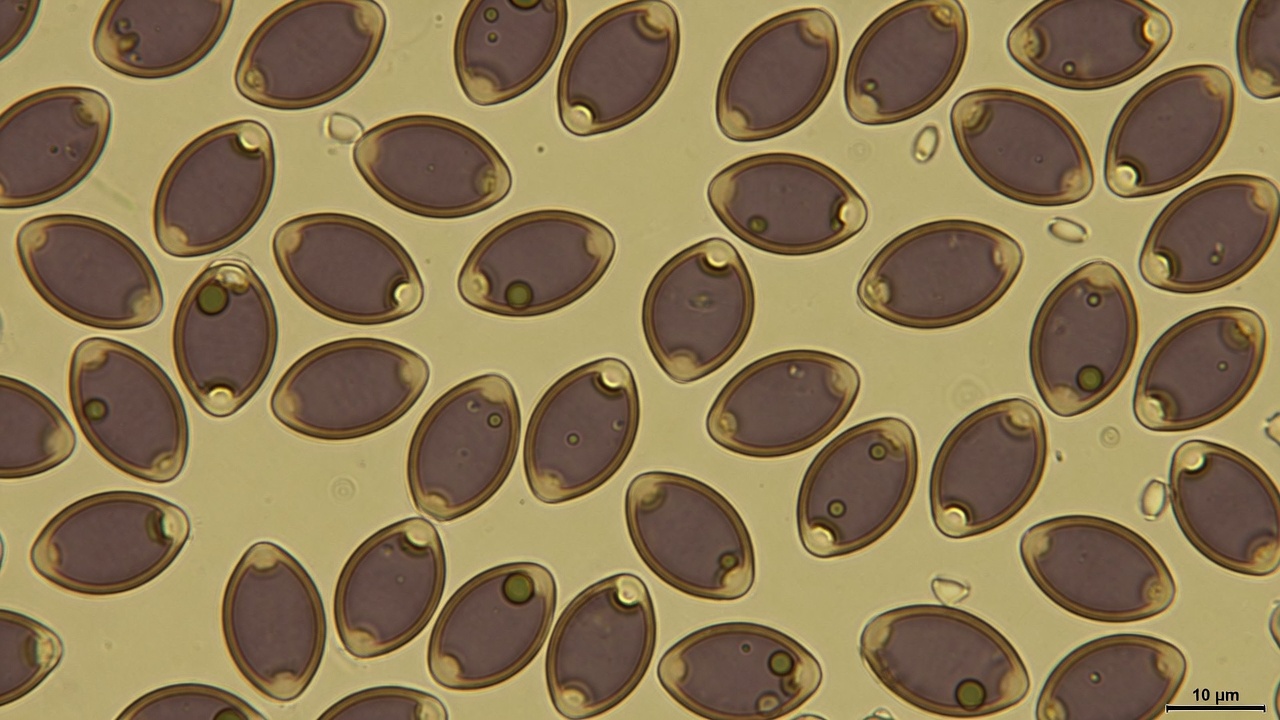
What Goes Wrong at the Edge of a Mount
Most problems in an unsealed mount start at the perimeter:
- Evaporation: the mounting fluid shrinks back from the edges, pulling spores with it and leaving a dense rim.
- Air bubbles: air enters as the fluid retreats. Bubble edges bend light and can make nearby spores look larger or oddly shaped.
- Drift: as the film thins, currents move spores across the field, which makes photographs soft and measurements unreliable.
- Movement of the coverslip: an unsealed coverslip can slide when you touch the stage or switch to an oil objective.
For a quick look at a spore print sample, none of this matters much. For a session where you want to measure 20 or 30 spores, photograph them, or come back to the same slide later, it does.
Common Sealants
VALAP. This is a 1:1:1 mixture of petroleum jelly (Vaseline), lanolin and paraffin wax, melted together and painted around the coverslip edge with a small brush. It hardens almost at once and can be reheated and reused many times. Microscopy facilities often recommend it over nail polish when solvents could affect the sample (UC San Diego microscopy protocols). It stays slightly soft, so you can lift the coverslip later if you need to.
Clear nail polish. This is the classic quick option for mounts you do not need to reopen. Let the mount settle first, blot away extra fluid, and then paint a thin line that overlaps both the coverslip and the slide. The same UC San Diego guidance warns that polish can seep under the coverslip, so keep the coat thin and do not flood the edge.
Mounting media that set. For permanent reference slides, a hardening medium such as glycerine jelly or a commercial mountant does the sealing and the mounting in one step. It is more work, but it produces slides that last for years.
Getting the Fluid Volume Right
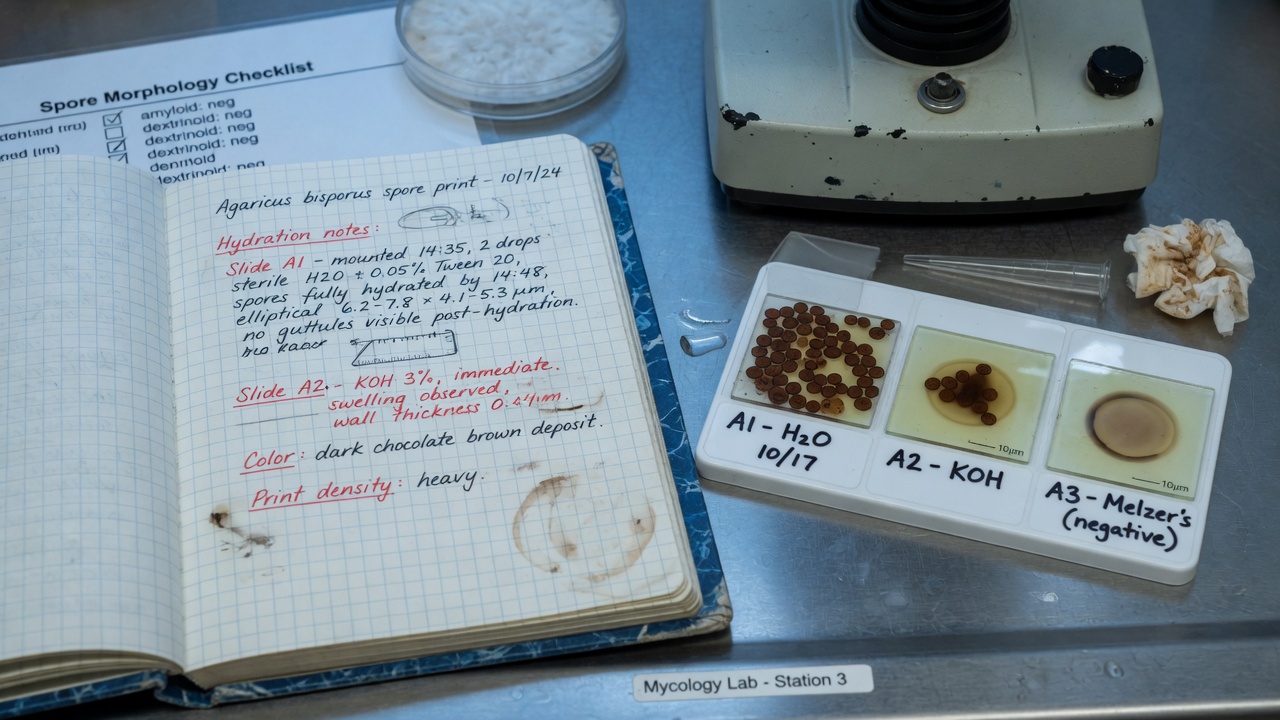
A seal only works if the mount underneath is sound. Too much fluid and the coverslip floats, spores slide, and sealant cannot bond to wet glass. Too little and air pockets form before you even start. A small drop, just enough to spread to the edges under the weight of the coverslip, is the target. Lower the coverslip at an angle from one side so the fluid front pushes air out ahead of it. Wick away any excess at the edge with a strip of tissue before sealing.
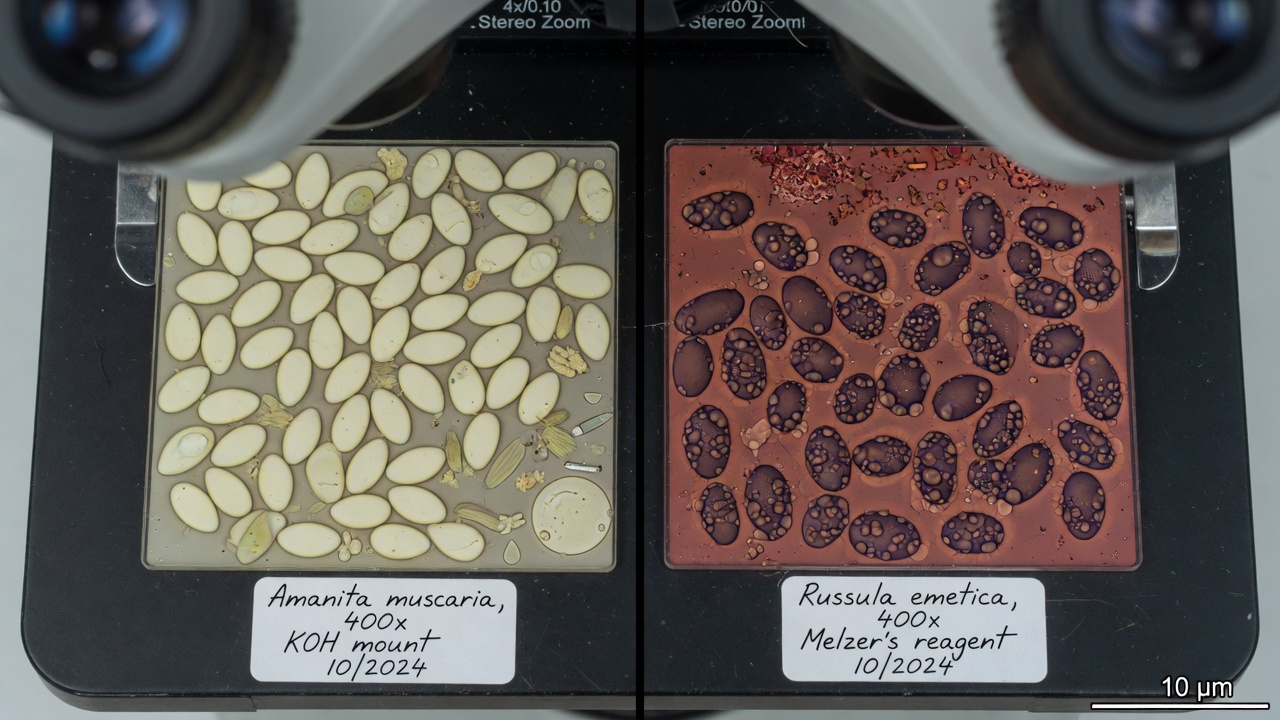
Water is fine for a first look. Many microscopists prefer a drop of dilute KOH or a mountant with a little glycerine for spore work, because it evaporates more slowly and makes the spore wall easier to see. Whatever you use, use the same fluid each time you measure, as some mounting fluids can make spores swell slightly.
Comparing Sealed and Unsealed Mounts
A useful exercise is to prepare two slides from the same sample, one sealed and one not, and check both after 5, 20 and 60 minutes. Note bubble formation, drying at the rim, and whether the spores you measured first are still in place. Most people find the unsealed slide is fine for the first few minutes and then deteriorates quickly from the edges inward. That tells you how long you have for quick checks, and when it is worth sealing.
Recording Your Preparation
Two people can measure the same spores and get different numbers if they mount them differently. Note the preparation alongside every set of measurements:
- sample name, source and date;
- mounting fluid (water, KOH, glycerine mix) and stain, if any;
- sealant used, or “unsealed”;
- time between mounting and measuring;
- objective, and whether your eyepiece reticle was calibrated.
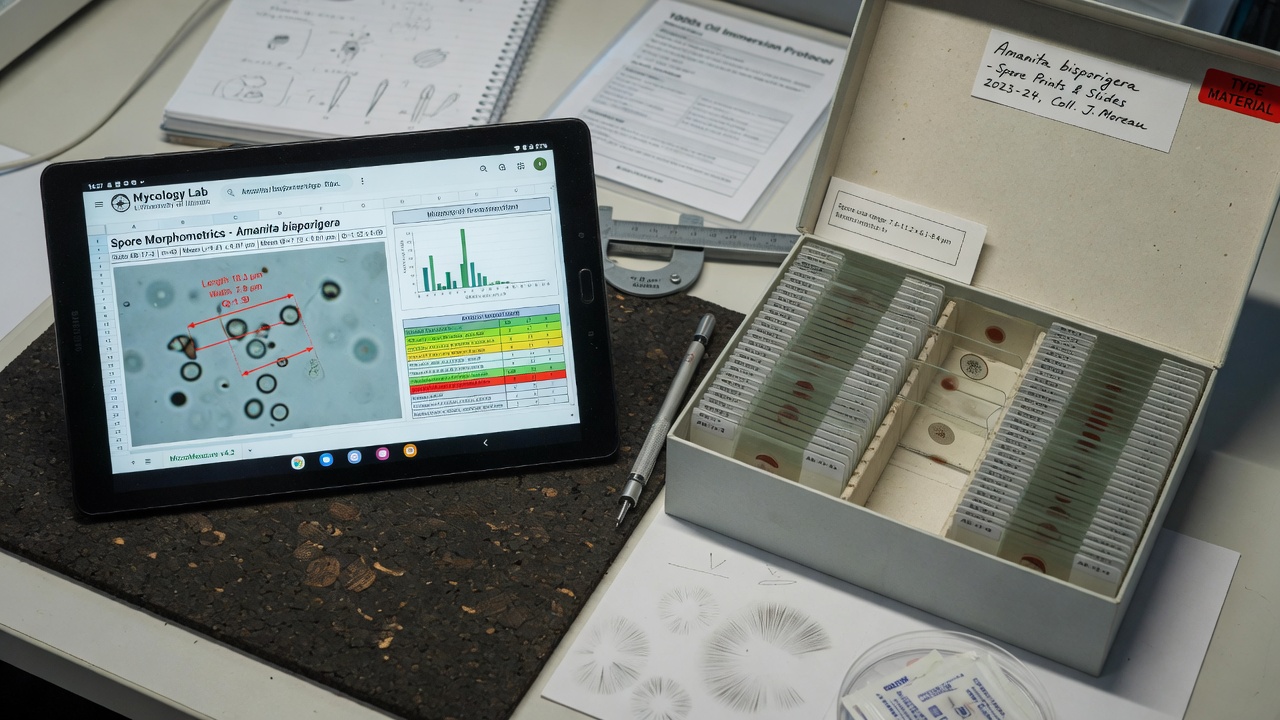
Our page on documenting spore samples goes into labelling and record-keeping in more detail, and the spore microscopy guide covers calibration and measuring.
Labelling Sealed Slides
A sealed slide is only useful later if you know what is on it. Write on the frosted end in pencil or solvent-resistant marker, not on the coverslip, and use the same sample code as your notebook. Store finished slides flat, in a slide box away from heat and direct sun, so wax seals do not soften and slides do not stick together.
Mushroom spores are sold strictly for microscopy and research purposes only. The cultivation of Psilocybin mushrooms is illegal in many jurisdictions.


