

María Sabina was a Mazatec healer and poet from the mountains of Oaxaca, in southern Mexico. For most of her life she was known only in her own community. Psilocybin mushrooms had been part of Mazatec healing for centuries. Then, in the mid-1950s, a visit from an American banker and amateur mushroom scholar made her the most famous name connected with them anywhere in the world. Her story is partly about a remarkable woman and partly about what happens when a local tradition is suddenly exposed to global attention.
Early Life in the Sierra Mazateca
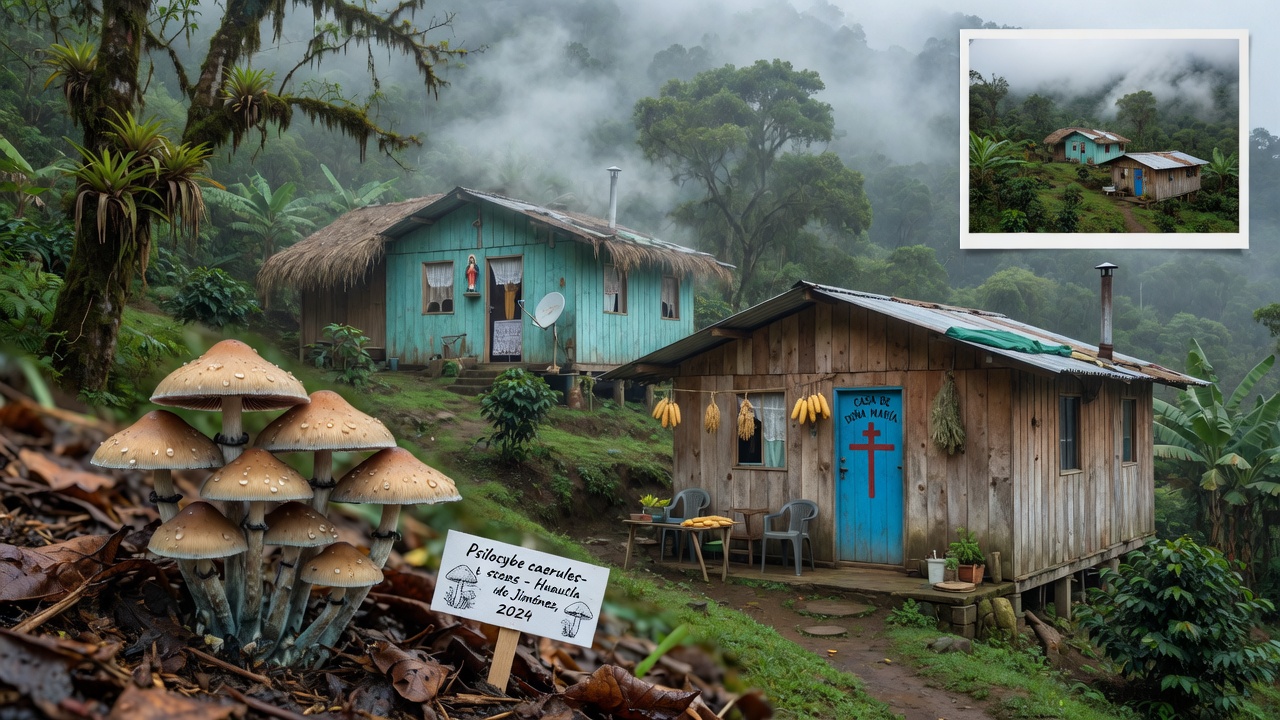
María Sabina Magdalena García was born outside Huautla de Jiménez, a town in the Sierra Mazateca of northern Oaxaca. She was not sure of her birth year herself but believed it was 1894 (María Sabina biography). Her parents were campesinos, small farmers, and her father died when she was very young. She spoke Mazatec, not Spanish, and never learned to read or write.
The Mazatec people have their own language and a long tradition of healing rituals (Mazatec people). Mushrooms had a place in that tradition for centuries, surviving long after Spanish colonial authorities tried to suppress them. Sabina described becoming a sabia, a “wise one”, as something she was called to rather than trained for.
The Velada
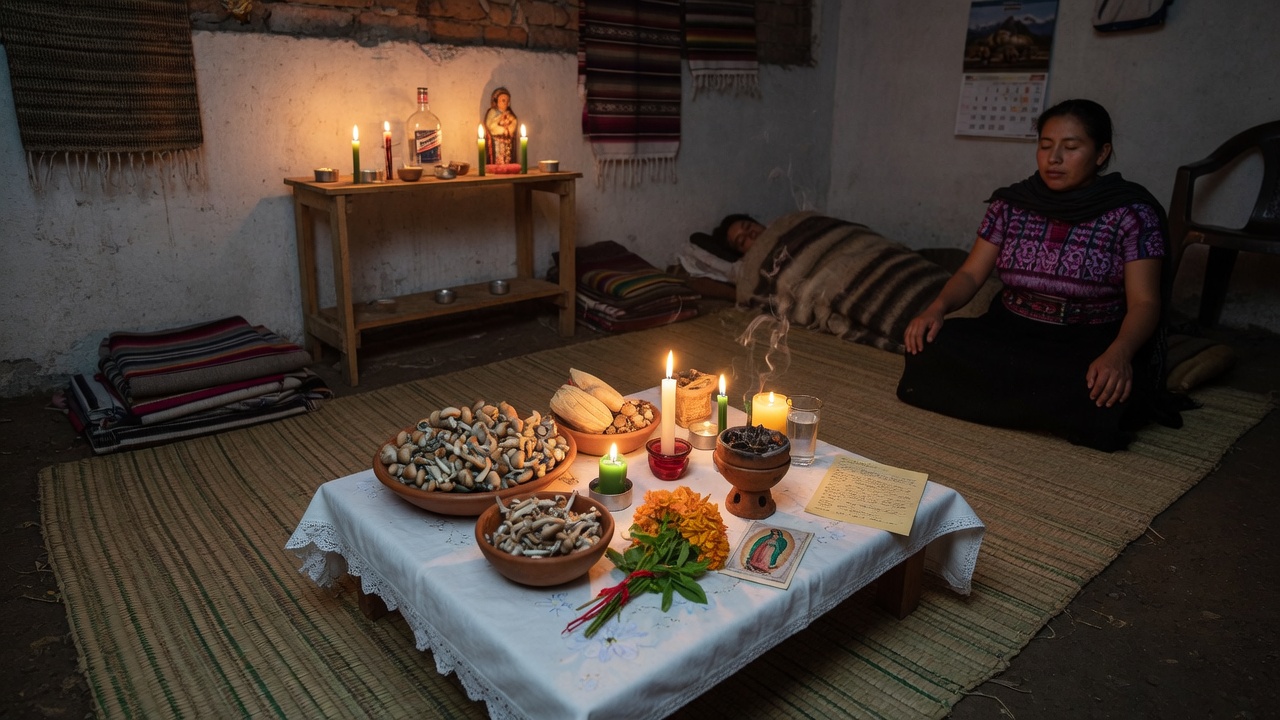
Her ceremonies are known as veladas, night vigils. They were held for people who came to her with illness or trouble, and they were community and family events as much as private ones. Their core was language. Sabina chanted and spoke for hours in Mazatec, in a style full of repetition, lists of names and statements of who she was and where her authority came from. She referred to the mushrooms as the “saint children”, and said it was they who spoke through her.
Scholars who later studied the recordings, including her Mazatec biographer Álvaro Estrada and the translator Henry Munn, have treated the chants as oral poetry. Estrada’s book, published in English as María Sabina: Her Life and Chants (1981), remains the main source for her own account of her life. Because she spoke only Mazatec, many quotations attributed to her in English are loose translations or cannot be verified.
Wasson’s Visit and the Life Article
In 1955, R. Gordon Wasson, a New York banker who studied mushrooms in culture with his wife Valentina, travelled to Huautla. There he took part in a velada led by Sabina. In May 1957, Life magazine published his account under the title “Seeking the Magic Mushroom” (“Seeking the Magic Mushroom”). The article did not give her real name or the name of the town, but the details were enough for readers to find her, and Wasson's later publications left little doubt.
The visit also mattered to science. The French mycologist Roger Heim identified the mushrooms used in the area, including Psilocybe mexicana, and samples were passed to the Swiss chemist Albert Hofmann, who isolated and named psilocybin and psilocin in 1958 (Psilocybe mexicana). Pills made from the synthetic compound were later brought back to Sabina, closing a strange loop between a village ceremony and a pharmaceutical laboratory. Our page on psilocybin mushrooms in history sets these events in the wider timeline.
The Cost of Fame
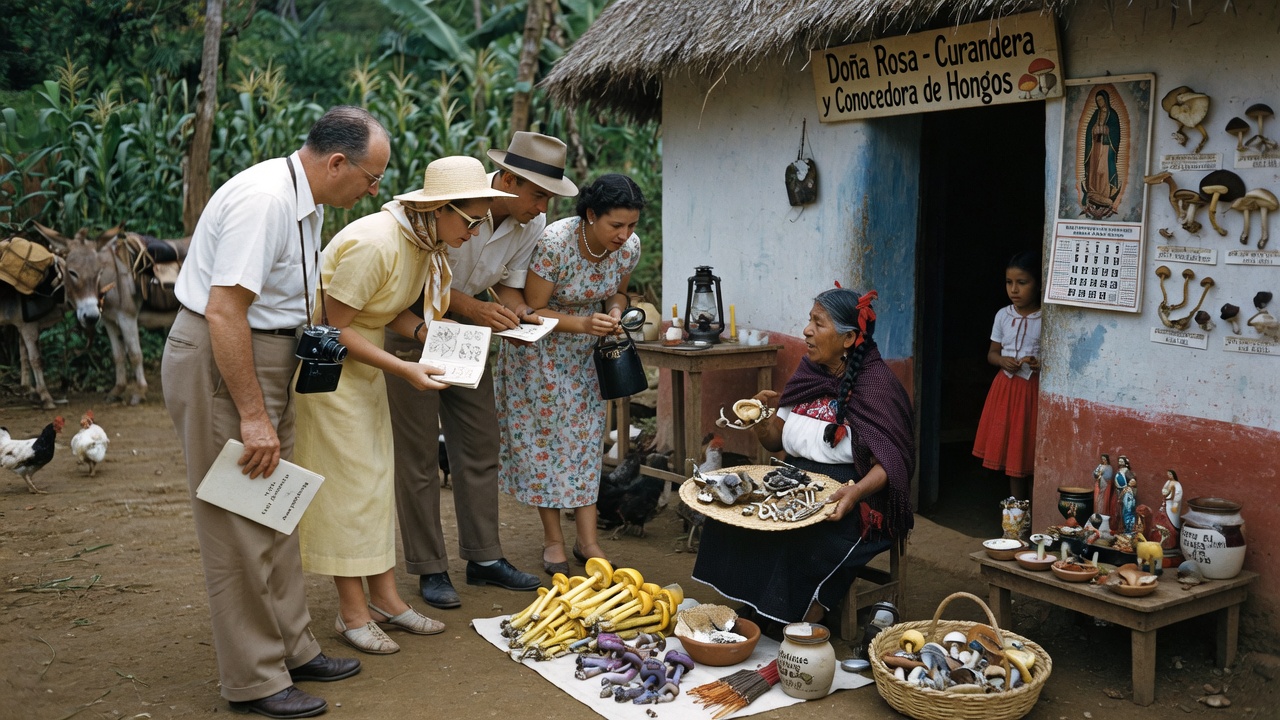
From the early 1960s, visitors from the United States and Europe began arriving in Huautla looking for Sabina and the mushrooms. Most had no interest in the healing purpose of the velada. Mexican police came to suspect her of drug dealing, and parts of her own community blamed her for the disruption. She was ostracised, and her house was burned. From 1967 to 1977 the Mexican Army blocked the roads into the town to keep unwanted visitors out.
Sabina later expressed regret about sharing the ceremony with outsiders, saying that the mushrooms had lost their purity and their power once they were treated as a curiosity. As with other quotations, the exact words come to us through translation, but the sentiment is consistent across the accounts. She died in poverty in November 1985.
Her Legacy
Today María Sabina is remembered in several ways at once: as a poet whose chants have been published and studied, as a symbol of Mazatec culture, and as a cautionary example of how outside attention can damage a living tradition. Her image appears on murals and souvenirs in Huautla, which now draws visitors partly because of her name. Writers, including the Mexican novelist Homero Aridjis, have made her the subject of fiction.
For people interested in mushrooms, her story is a reminder that the fungi studied in laboratories and under microscopes have human histories too. Those histories belong first to the communities that kept them. Other figures from the same era, such as Timothy Leary and Terence McKenna, took the story in very different directions. For the species most people now associate with the word “psilocybin”, see our P. cubensis species guide.
Mushroom spores are sold strictly for microscopy and research purposes only. The cultivation of psilocybin mushrooms is illegal in many jurisdictions.


Who was María Sabina?