

Updated: October 5, 2026
Mushroom spores are sold strictly for microscopy and research purposes only. Cultivation of Psilocybin-containing fungi is illegal in many jurisdictions. This page is not a guide to finding, growing, or taking mushrooms.
Short answer: Natal Super Strength, shortened to NSS, is a catalogue name. Sellers sell it as Psilocybe Cubensis (Earle) Singer and say it comes from KwaZulu-Natal in South Africa. It is not a published species or variety, and it is not the same name as Psilocybe natalensis Gartz, D.A. Reid, M.T. Sm. & Eicker (1995), a separate species. "Super Strength" is a marketing phrase, not a measurement. A microscope can show spore characters, but the sources reviewed do not settle which species a given NSS sample is, so we treat the identity as unsettled.
Home » Strain Encyclopedia » Psilocybe Cubensis » Natal Super Strength
In this guide
- What NSS is
- Taxonomy
- NSS, Psilocybe natalensis and the 2026 species
- What is documented and what is lore
- Spore traits
- Origin claims, source by source
- Identifying it, and what a microscope can't tell you
- Examining a slide
- Mushly products
- Legal note
- References
- FAQ
What NSS is
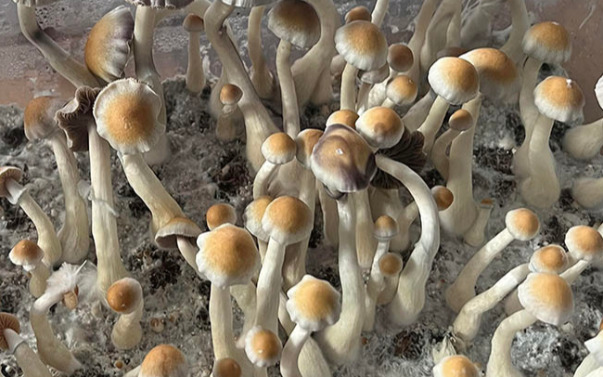
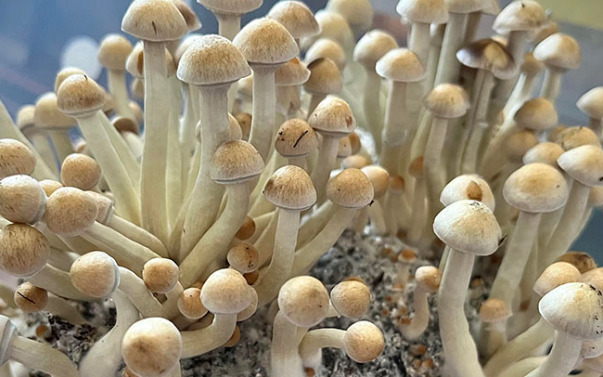
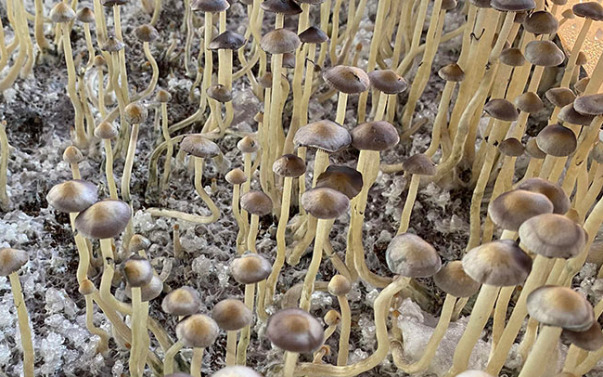
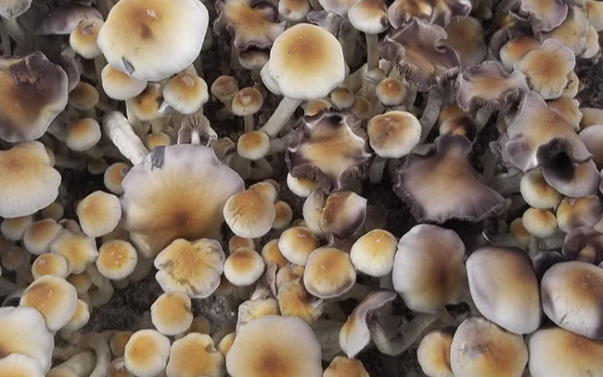
NSS is a name used by spore sellers for a South African line. It describes a product and not a taxon, and "Super Strength" is a claim in the name, not a published finding. Mushly makes no claim about the strength of any sample. For the difference between a species and a trade name, see our species vs strain primer and the Psilocybe cubensis species guide.
"Natal Super Strength is a catalogue name sold as Psilocybe cubensis, not a published species or variety. It is separate from Psilocybe natalensis. Sellers say KwaZulu-Natal; species identity is not settled by the sources reviewed."

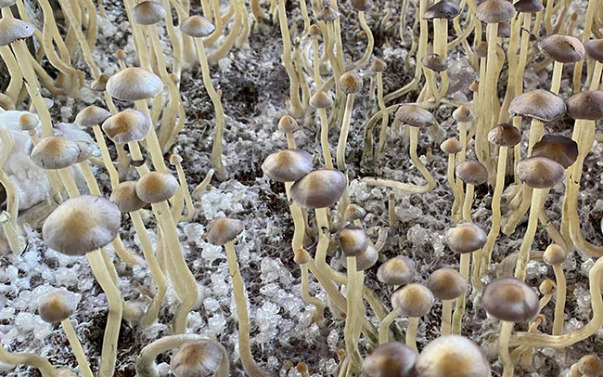
Taxonomy
| Name | Entry |
|---|---|
| Psilocybe cubensis | (Earle) Singer, Sydowia 2(1-6): 37 (1948). Basionym Stropharia cubensis Earle (1906). Family placement varies by source: Agrocybaceae in Index Fungorum, Species Fungorum and NCBI, and Hymenogastraceae in many other references. |
| Psilocybe natalensis | Gartz, D.A. Reid, M.T. Sm. & Eicker, Integration 6: 29 (1995). Described from Natal, South Africa. Wikipedia describes it as very closely related to P. cubensis, differing in habitat, a less persistent ring and genetic sequence. |
| Psilocybe ochraceocentrata | Described in 2026 by Bradshaw and colleagues as the closest free-living relative of P. cubensis found in Africa, according to Wikipedia. |
| Natal Super Strength / NSS | Informal catalogue name. Not a taxon. |
Species records for P. cubensis: Index Fungorum 290107 and NCBI Taxonomy 181762. None lists NSS.
NSS, Psilocybe natalensis and the 2026 species
Three names get mixed up here, and none of the sources reviewed ties NSS to one of them with a published specimen.
- NSS and P. cubensis: sellers describe NSS as a P. cubensis strain from KwaZulu-Natal. That is a seller classification, not a published identification.
- NSS and P. natalensis: the names look alike, but P. natalensis is a separately described species. No source showing NSS is P. natalensis is known, and the seller pages that address it say NSS is not.
- P. ochraceocentrata: a 2026 paper in Royal Society Publishing, titled "Discovery of the closest free-living relative of the domesticated 'magic mushroom' Psilocybe cubensis in Africa," describes this species. It also would not show that every NSS sample is that species.
The practical point is that the label does not settle the species. Treat "NSS = P. cubensis" as the sellers' classification, and check any later taxonomic work before you rely on it.
What is documented and what is lore
| Question | Status |
|---|---|
| Is NSS a species or published variety? | No. It is a catalogue name. |
| Is it Psilocybe natalensis? | No source shows that. They are separate names. |
| Is it Psilocybe cubensis? | Sellers say so. A 2026 paper raises doubt about public NSS-labelled sequences. Unsettled. |
| Collected in KwaZulu-Natal | Seller claim. No voucher or date is published in the sources reviewed. |
| Documented by a named researcher | One seller names one person. Unverified. |
| "Super Strength" | A marketing phrase. Not a published measurement. |
Spore traits
Published spore data exist for P. cubensis as a species, and none are specific to NSS.
- Singer and Smith (1958): 11.5-17.3 × 8-11.5 × 7-9 µm; smooth, thick-walled, truncate apex with an apical pore (Mycological investigations on Teonanácatl). KOH and NH4OH colours are mountant colours, not print colours.
- Guzmán et al. (2012): (12-)13-15(-17) × 8-10(-11) × 7-9 µm (Mycotaxon 119).
Because these close relatives may share spore characters, spores alone are not a reliable way to separate them. None of the seller pages I opened gives a measured NSS spore size.
Origin claims
Short answer: sellers agree on KwaZulu-Natal and differ on the rest.
| Source | What it says |
|---|---|
| MyShrooms | "A South African Psilocybe cubensis strain originally documented in KwaZulu-Natal by researcher Jon MacGillivray." Calls it a P. cubensis strain and not natalensis. Gives no date. |
| Zombie Myco | "Originally discovered in the wild grasslands near Natal, a coastal region in South Africa," near Durban, and popular "in underground mycology circles in the early 2000s." Names no collector. Says it is a P. cubensis strain. Adds that there is "growing speculation" about Zulu or Xhosa knowledge of such mushrooms, with "no concrete historical records." |
The two sellers agree on a place and on calling it P. cubensis. One names a person and the other names none, and neither cites a specimen. A repeated claim is still one claim. We do not state a person, a year or a precise site as fact, and we do not repeat the speculation about historical use.
Identifying it
Short answer: microscopy does not settle the species here.
- What a match shows: smooth, thick-walled spores with a truncate apex and germ pore support Psilocybe, and fit the P. cubensis description.
- What it cannot show: that a packet is NSS rather than another label, that it came from KwaZulu-Natal, or whether it is P. cubensis, P. natalensis or a close relative.
- Chemistry: Mushly makes no claims about the chemical content of NSS, and no published laboratory analysis under this name that could be verified is known.
Examining a slide
Follow the general method in our Golden Teacher guide and the mushroom spores guide, and then:
- Measure at least 20 spores (length × width) and record the magnification and mountant.
- Note the germ pore, the wall, and the shape in face and side view.
- Record the colour in the mountant and the print colour separately.
- Write down the exact label (Natal Super Strength or NSS), supplier and date.
- Remember the limit: a spore match does not prove the NSS label or the species.
Mushly products
Mushly does not currently list a syringe or print named Natal Super Strength. This page is a reference note and not a product page. To study related lines, browse our spore syringes for microscopy or see the Psilocybe cubensis strain list.
Legal note
Mushly offers spores for microscopy, taxonomy, and mycological research. Laws on spores, and on psilocybin-containing mushrooms, differ by country and by U.S. state, and cultivation of psilocybin- or psilocin-containing species is illegal under U.S. federal law and in many other jurisdictions. Check the law where you live before ordering.
Browse spore syringes · Strain library · Mushroom spores for microscopy guide
References
- Index Fungorum 290107; NCBI Taxonomy 181762
- Singer, R. & Smith, A.H. (1958), Mycologia 50
- Guzmán et al. 2012, Mycotaxon 119: 65-81
- Wikipedia: Psilocybe natalensis (authority, type locality, relation to P. cubensis)
- Wikipedia: Psilocybe ochraceocentrata (2026 description; summary only, the paper itself was not reviewed)
- Seller claims (not papers, not verified): MyShrooms; Zombie Myco




Does Mushly supply NSS spores?