

Here is a puzzle about how Psilocybin evolved that has kept mycologists busy for years. Psilocybin turns up in a handful of mushroom genera that are not especially close relatives: Psilocybe, of course, but also some species of Panaeolus, Gymnopilus, Pluteus, Pholiotina and Inocybe. If the compound had been handed down from a single ancestor, you would expect it to show up in one tidy branch of the family tree. Instead it is scattered across the tree like confetti. Over the last decade, genome sequencing has finally started to explain why, and the answer is stranger and more interesting than a simple family inheritance.
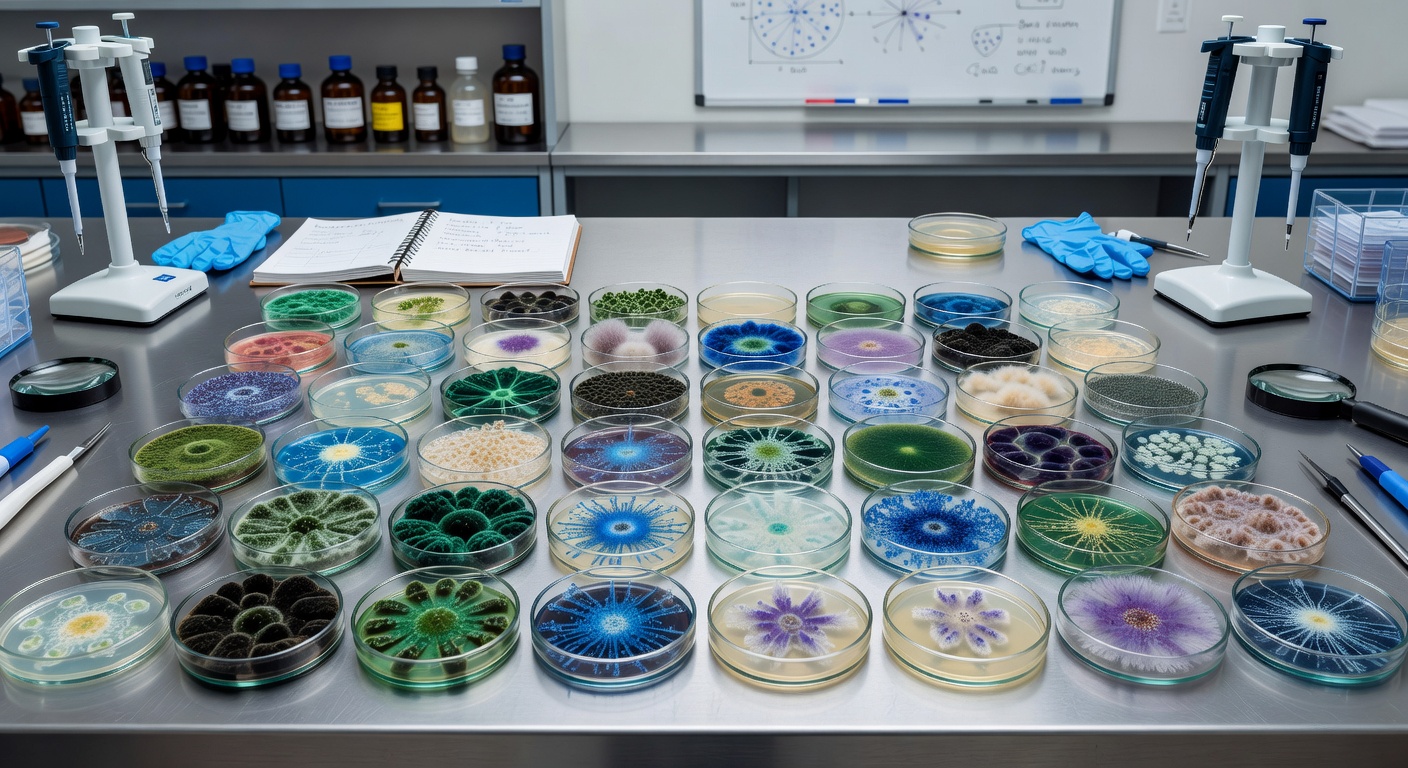
A Patchy Pattern on the Family Tree
All of the genera above belong to the Agaricales, the big order of gilled mushrooms. Within that order, though, they sit in different families, and most of their close relatives make no psilocybin at all. Even inside Psilocybe itself, the compound is the rule rather than a universal law: a 2018 genome study noted that Psilocybe fuscofulva, which sits at the base of the genus, lacks the genes altogether (Reynolds et al., Evolution Letters, 2018).
Biologists usually explain a patchy pattern like this in one of three ways. The trait could be ancient and then lost in many lineages. It could have evolved more than once, independently, the way caffeine evolved separately in coffee, tea and cacao (Denoeud et al., Science, 2014). Or the genes could have jumped sideways between species, a process called horizontal gene transfer. As it turns out, the psilocybin story seems to involve more than one of these.
Four Genes That Travel Together
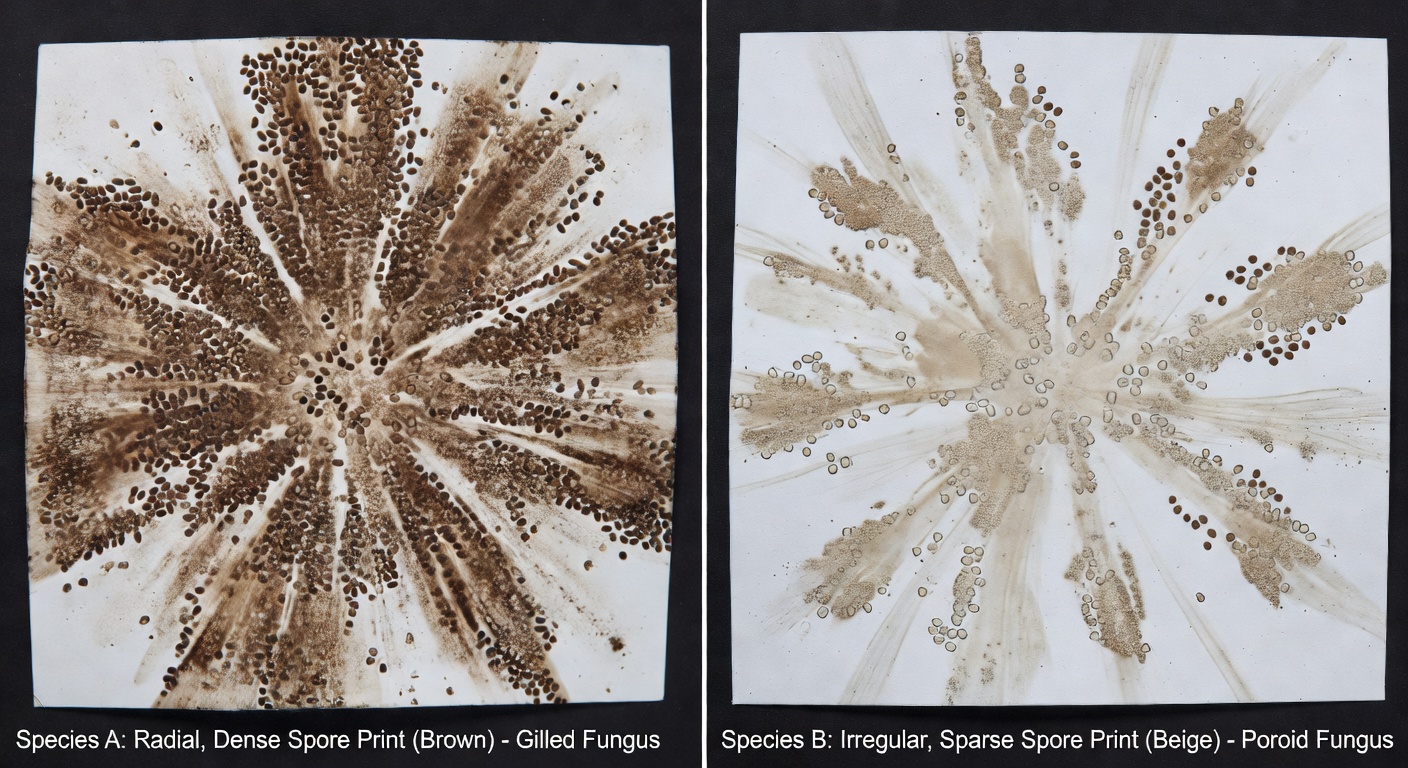
The first big step came in 2017, when a team at the Hans Knöll Institute in Jena worked out the enzymes that build psilocybin in Psilocybe cubensis. They identified four: PsiD, which trims the amino acid tryptophan into tryptamine; PsiH, which adds a hydroxyl group; PsiK, which attaches a phosphate; and PsiM, which adds the final methyl groups. They then made the compound in a test tube using the purified enzymes (Fricke, Blei & Hoffmeister, Angewandte Chemie, 2017).
The key detail for evolution is that the genes for these enzymes sit side by side in the genome as a compact cluster. A tidy bundle of genes is exactly the kind of cargo that can move between organisms as a unit. When Reynolds and colleagues sequenced three psilocybin mushrooms from different lineages (Psilocybe cyanescens, Gymnopilus dilepis and Panaeolus cyanescens), the gene trees did not match the species trees in the way simple inheritance predicts. Their best explanation was that the cluster had been passed horizontally between fungi. They also noticed that mushrooms carrying the cluster tend to live in dung or in decaying wood, crowded habitats full of insects and other invertebrates, and suggested the compound might have given an advantage there (Reynolds et al., 2018).
New Species Still Turning Up in the Field
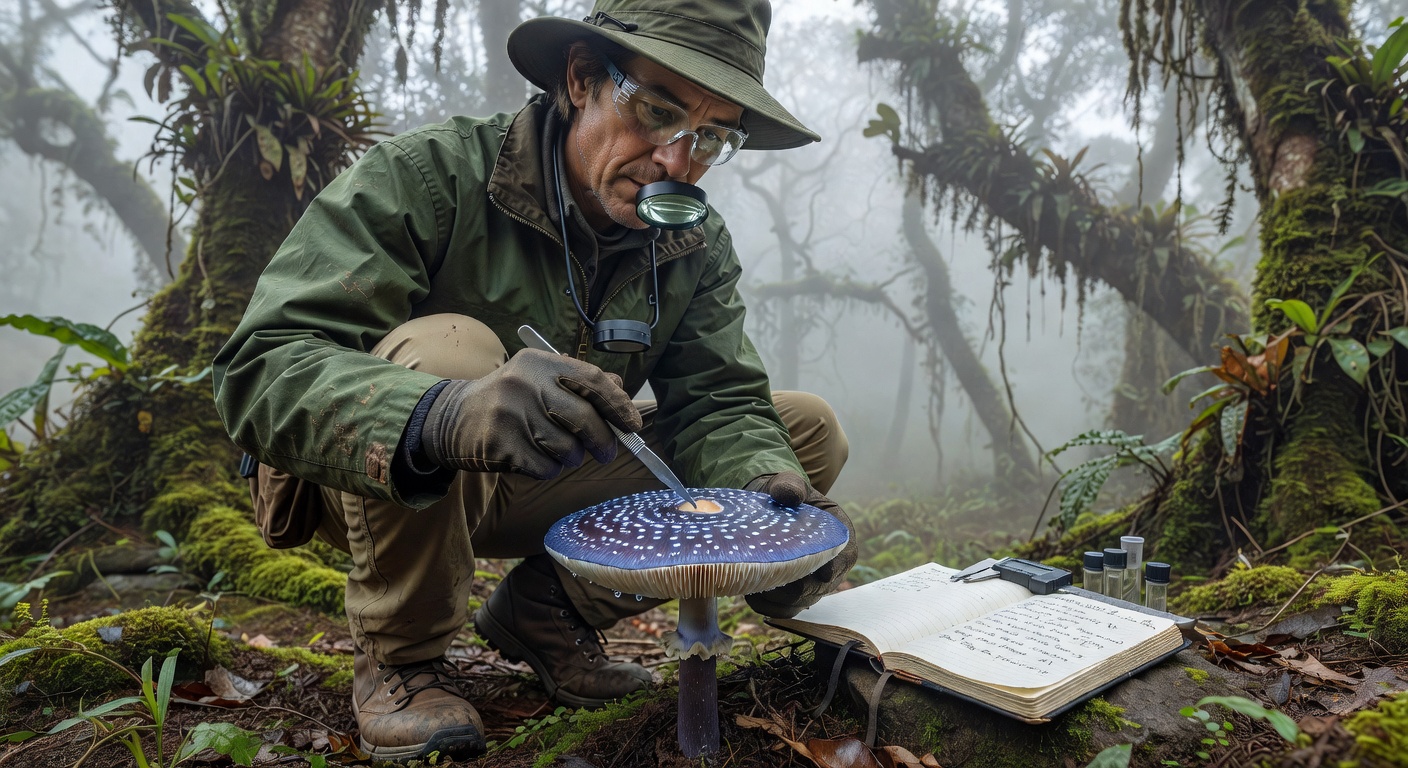
Part of what makes the evolutionary picture hard to finish is that the genus is still being described. In 2024, a team led by Breyten van der Merwe published two new species from southern Africa in the journal Mycologia. Psilocybe ingeli was first collected in 2023 on manure-enriched grassland near Harding in KwaZulu-Natal. Psilocybe maluti grows on cattle dung in South Africa’s Free State and KwaZulu-Natal and in the highlands of Lesotho, and the paper also records its traditional use by Basotho healers (van der Merwe et al., Mycologia, 2024; summary at Phys.org).
Finds like these matter for more than bragging rights. Every newly described species is a new tip on the tree, and southern Africa has had far less attention from Psilocybe taxonomists than places like Mexico. Filling those gaps is how researchers test whether the current story about where the genus came from holds up.
Museum Specimens Put a Date on It
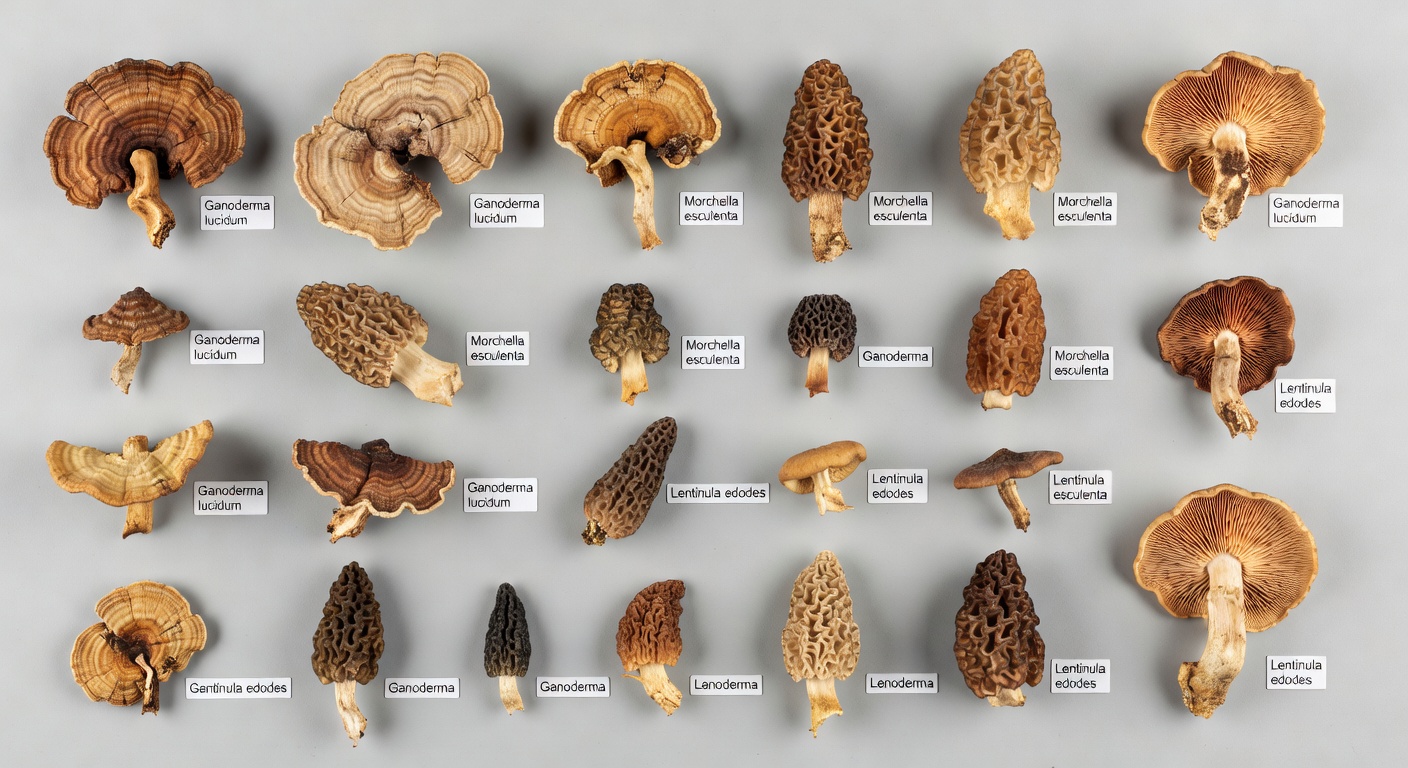
The most detailed timeline so far comes from dried specimens rather than fresh ones. In 2024, Alexander Bradshaw, Bryn Dentinger and colleagues sequenced DNA from 71 fungarium (fungal herbarium) collections, 23 of them type specimens, the reference collections that officially anchor each species name. Using nearly 3,000 genes, they built a fully supported family tree of Psilocybe, a genus of roughly 165 described species (Bradshaw et al., PNAS, 2024).
Their molecular clock suggests the Psilocybe lineage arose about 67 million years ago, close to the mass extinction that ended the age of dinosaurs, and began diversifying around 56 million years ago. The psilocybin gene cluster appears to have originated in Psilocybe, then made four or five likely horizontal jumps into other mushrooms between about 40 and 9 million years ago. They also found that the cluster comes in two different gene orders that line up with a deep split in the genus, which could mean Psilocybe acquired it twice. The authors present that last point as a possibility, not a settled fact (open-access version on PMC).
The Inocybe Exception
Not every psilocybin mushroom fits the “borrowed genes” story. Inocybe is better known for muscarine, a completely different toxin. A 2013 study of the family Inocybaceae found that psilocybin appeared independently at least twice in that group, roughly 10 to 20 million years ago, in lineages that had already lost muscarine (Kosentka et al., PLOS ONE, 2013). A 2023 review by Matthew Meyer and Jason Slot of Ohio State University pulls these threads together and points to evidence for both convergent evolution and horizontal transfer in shaping where psilocybin shows up (Meyer & Slot, Fungal Genetics and Biology, 2023).
So Why Make It at All?
This is the honest “we don’t know yet” part. Meyer and Slot point out that mushrooms invest a lot of nitrogen, a scarce nutrient for fungi, in psilocybin and related compounds, and that genes which keep being gained and kept probably earn their place. Yet they also stress that no precise ecological role has been shown by experiment. The leading idea is that because psilocin looks so much like serotonin, it may interfere with the nervous systems of animals that eat or tunnel through mushrooms, such as insects and other invertebrates. Other explanations are still on the table.
One clue comes from the famous blue bruising. When a Psilocybe mushroom is damaged, two enzymes spring into action: a phosphatase called PsiP strips the phosphate off psilocybin to make psilocin, and a laccase called PsiL links psilocin molecules into blue chains. The Jena team suggested that the phosphate works as a removable safety cap on a reactive molecule, ready to be taken off the moment tissue is injured (Lenz et al., Angewandte Chemie, 2020). That fits a defence story nicely, but fitting a story is not the same as proving it.
Species, Strains and What the Genes Tell Us
All of this evolution happened at the level of genera and species, over millions of years. The named cultures you see in catalogues, such as the many lines of P. cubensis, are much younger labels inside a single species. They share the same biosynthetic machinery described above, so a strain name is best read as a record of where a culture came from rather than as a separate branch of the evolutionary tree. Mushly’s species vs strain primer explains the difference, and the full strain catalogue shows how many labels sit under a few species names.
For anyone who likes to look for themselves, the microscope is where these big ideas meet something you can actually see. Under the lens, a typical Psilocybe spore is smooth and thick-walled with a germ pore at one end, and a print made from the cap is dark purple-brown. Those shared features are part of what ties the genus together. The mushroom spores guide covers what to look for on a slide, and Mushly’s spore prints and spore syringes are offered for exactly that kind of microscopy work.
The Mystery, Narrowed Down
A decade ago, the scattered distribution of psilocybin was mostly a matter of guesswork. Today there is a named set of genes, a working timeline that starts near the end of the Cretaceous, good evidence that the cluster has jumped between lineages, and a clear case of independent evolution in Inocybe. What remains open is the question at the heart of it all: what the compound actually does for the mushroom. For a broader look at how people have encountered these fungi over the centuries, see psilocybin mushrooms in history, and for a plain-language overview of the compound itself, Britannica’s entry on psilocybin is a good starting point.
Mushroom spores are sold strictly for microscopy and research purposes only. The cultivation of psilocybin mushrooms is illegal in many jurisdictions.


