

Last reviewed: 17 September 2026. Educational microscopy guide — not legal advice. Mushly sells mushroom spores as spore syringes and spore prints for research use only. We do not sell grow kits or provide cultivation instructions.
Mushroom spores are the microscopic reproductive units fungi use to disperse genetics. For researchers and microscopists, they are specimens for taxonomy, morphology notes, and photomicrography—not a shortcut to growing mushrooms. This guide explains what spores are, what people mean by magic mushroom spores, which formats Mushly sells, and how to store them for study. Psilocybin is found in the mature mushrooms of certain species, not in their spores, which is why the legal position of spores is often different; that is covered below too. Links to the shop are included when you are ready to order.
Shop spore syringes · Shop spore prints · Best-selling spores · Full spore shop
What are mushroom spores?
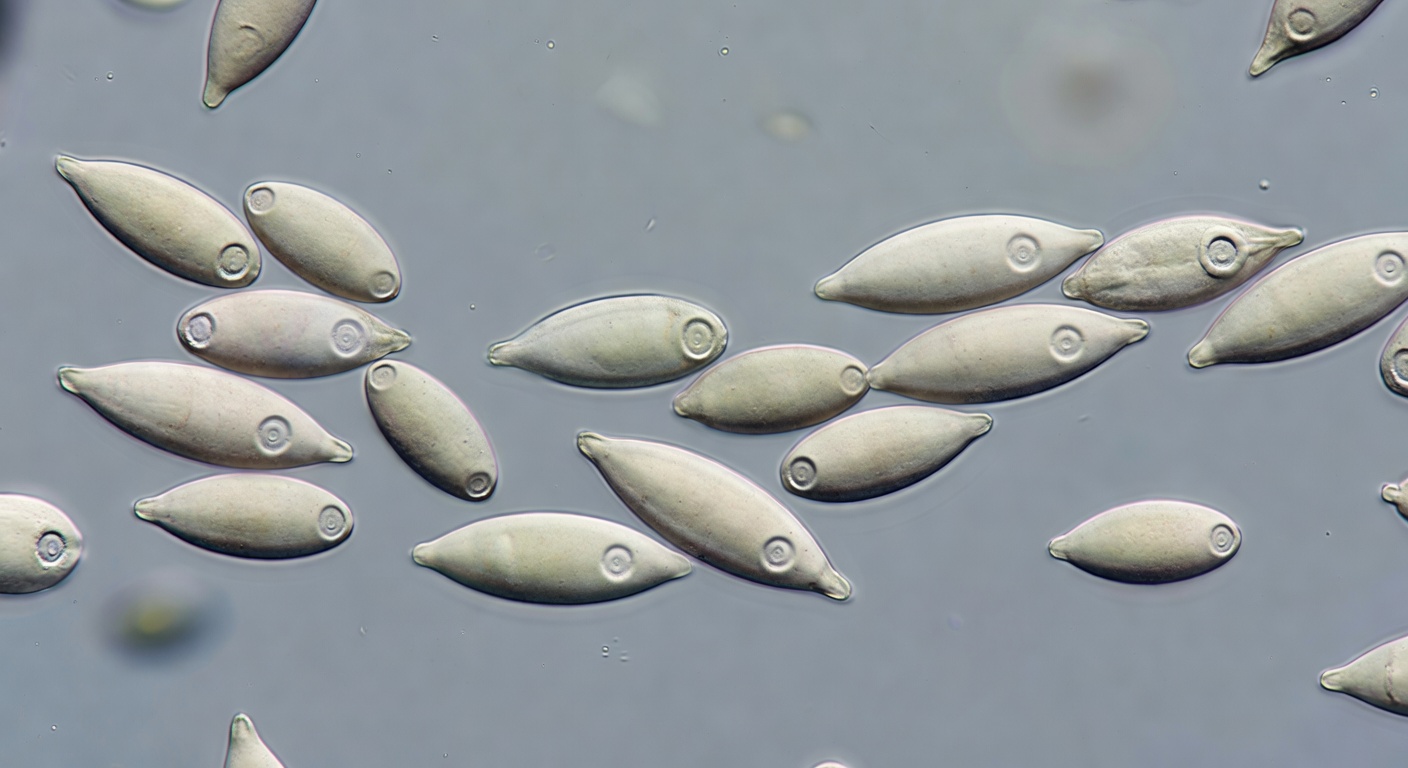
In simple terms, a spore is a single reproductive cell (or a tightly packaged set of cells) that can travel away from the parent fungus. Under a microscope, spores show traits such as color, size, shape, ornamentation, and wall structure. Those traits help document a specimen and compare it with related material.
Mushroom spores are studied on slides with standard microscopy workflows: prepare a mount, observe under suitable magnification, and record what you see. That is the use case Mushly optimizes for—clear strain naming, sterile packaging language for lab handling, and product pages that describe what you are buying.
Important distinction for research buyers: ungerminated spores of many species do not contain psilocybin or psilocin, while mature fruiting bodies of certain taxa do. Germination and cultivation of psilocybin-producing mushrooms are a separate legal and practical category. Mushly does not teach or support cultivation.
Internationally, the 1971 UN Convention on Psychotropic Substances lists the chemicals psilocybin and psilocin, not spores or mushrooms (UN Convention on Psychotropic Substances). Each country then decides how to treat the fungi themselves, which is why rules differ so much; the EU Drugs Agency summarises the variation across Europe (EUDA hallucinogenic mushrooms profile).
What are magic mushroom spores?
Magic mushroom spores usually means spores from fungi associated with psilocybin-containing mushrooms (often Psilocybe and related genera in hobby and research conversation). People use that phrase when they want a plain definition, format options (syringe vs print), and legality basics for microscopy—not grow-kit marketing.
On Mushly, “magic mushroom spores” still means microscopy specimens: syringes and prints labeled for educational and laboratory study. Product and strain pages focus on observable morphology and documentation. They do not provide dosing, consumption, or fruiting instructions.
If your question is mainly “where can I buy them in my country,” use the regional guides:
Spores vs mushrooms vs mycelium (quick glossary)
- Spores — microscopic reproductive units; primary Mushly catalog focus for slide work.
- Fruiting body / mushroom — the visible reproductive structure; may contain controlled compounds in some species.
- Mycelium / culture — living vegetative growth; a different product class from spore syringes and prints.
Keeping those terms straight avoids mixing a microscopy purchase with cultivation.
Spore formats for sale: syringes vs prints
When buying mushroom spores, you usually need a format that matches their workflow.
Spore syringes
A typical Mushly listing is a measured suspension (often 12cc) suited to preparing slides and comparing spore density under magnification. Visible titles follow {Strain} Spore Syringe 12cc. Syringes are convenient when you want a ready suspension for routine microscopy.
Browse spore syringes · see also clear spore syringe explained.
Spore prints
A print is a dried spore deposit used as a reference specimen and for longer-term comparison. Titles follow {Strain} Spore Print. Prints suit collectors and documentation projects that prefer a dry deposit over a liquid suspension.
Multi-packs and best sellers
Multi-packs help when one session covers several strains. If you want popular strains first, start with best-selling spores (for example Golden Teacher and other popular microscopy strains).
How to choose a strain for microscopy
Pick strains the way a documenter would:
- Correct species labeling — not every strain is Psilocybe cubensis; Mushly strain pages use the right binomial (for example non-cubensis taxa called out clearly).
- Stable product pages — clear format, size, and research framing.
- Morphology notes — strain pages and product copy should help you know what you are comparing.
Explore the all-strains library or a strain page such as Golden Teachers, then buy the matching syringe or print in the shop.
Storing mushroom spores for study
Storage goals for microscopy are simple: protect the specimen from unnecessary heat, light, and contamination risk, and keep labels intact so your notes stay tied to the right product. Cool, dark, stable conditions are the usual research preference. For handling quirks after cold exposure, see microscopic examination after cold exposure.
Mushly does not provide germination or incubation protocols. Storage advice here is for specimen integrity during research—not for cultivation.
Legal basics for microscopy buyers
Rules vary by country and, in the United States, by state. A few principles help frame research purchases:
- Compounds vs spores — psilocybin and psilocin are controlled in many jurisdictions; ungerminated spores are often discussed separately because they typically lack those compounds, but state and national statutes can still restrict spores.
- USA restricted examples — California, Florida, Georgia, and Idaho have explicit spore/mycelium-related restrictions in current statute summaries; see the USA & Canada guide for citations and a jurisdiction table.
- Canada — psilocybin and psilocin appear in CDSA Schedule III; Health Canada frames unauthorized activities with magic mushrooms / those compounds as illegal unless authorized. Microscopy spore sales are not a cultivation licence.
Always verify official sources for your address. This page is general information, not legal advice.
Why researchers use Mushly
- Microscopy-first catalog — syringes and prints with clear strain naming.
- Long-running shop focus — trusted spore supplier positioning since 2009.
- Strain pages + shop products — documentation context linked to what you can buy.
- No grow-kit curriculum — research and educational framing only.
Open the shop when you are ready to order specimens for microscopy.
What you can observe under the microscope
A useful microscopy session on mushroom spores usually records a short checklist: spore color in mass and under the lens, approximate size range, shape (for example ellipsoid vs other outlines), surface texture, and any notable wall features. Comparing two strains side by side is easier when labels, magnifications, and mount methods stay consistent across notes.
Strain pages on Mushly exist to support that documentation habit—species binomials, morphology context, and links into the matching shop products—so your purchase and your notes stay aligned. The all-strains library is the map; the shop is where you obtain the syringe or print.
Mushroom spores and “psilocybin spores”
People often say psilocybin spores, psilocybin mushroom spores, or shroom spores when they mean the same microscopy category as magic mushroom spores. Those phrases are synonyms in practice for many buyers. This guide covers all of them.
None of these terms means a cultivation course, yield claims or consumption guidance on Mushly. Our pages stay within microscopy and lawful research.
From this guide to the shop
A simple order to follow:
- Read this guide for definitions, formats, storage and legal basics.
- Use a regional guide if you need USA/Canada, UK/Europe or Australia context.
- Open spore syringes or spore prints to buy.
- Optional: start from best sellers if you want popular microscopy products first.
That way the background reading and the buying are kept separate and easy to find.
Vendor checklist (microscopy buyers)
Whether you buy from Mushly or compare vendors, a research-buyer checklist helps:
- Does the site speak microscopy and legality, or grow-kit hype?
- Are species names accurate on non-cubensis taxa?
- Are syringe vs print formats obvious before checkout?
- Are shipping regions and restrictions stated clearly?
- Are product pages stable enough to cite in lab notes?
Mushly is built around that checklist: sterile packaging language for lab use, strain-level pages, and category paths for syringes and prints—not inoculation tutorials.
Mushroom spores are sold strictly for microscopy and research purposes only. The cultivation of psilocybin mushrooms is illegal in many jurisdictions.


What are mushroom spores used for?