

Updated: October 2, 2026
Mushroom spores are sold strictly for microscopy and research purposes only. Cultivation of Psilocybin fungi is illegal in many jurisdictions. This page is not a guide to finding, growing, or taking mushrooms.
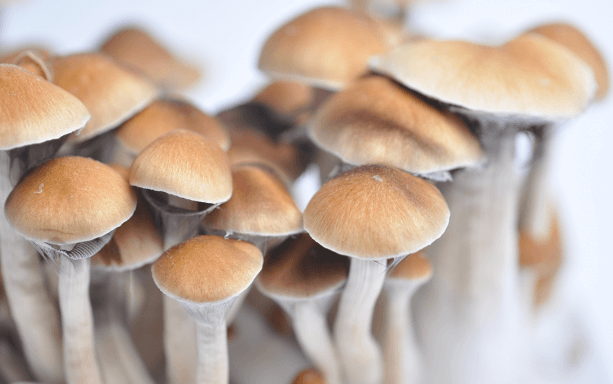
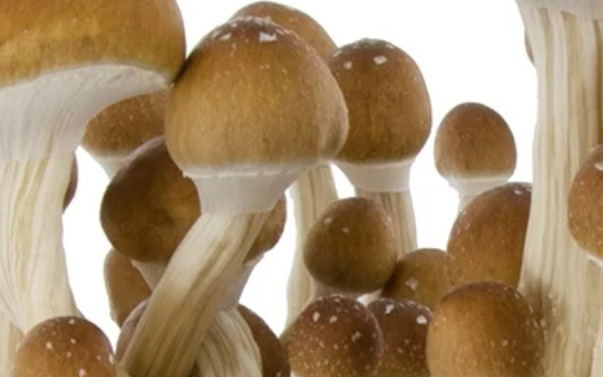
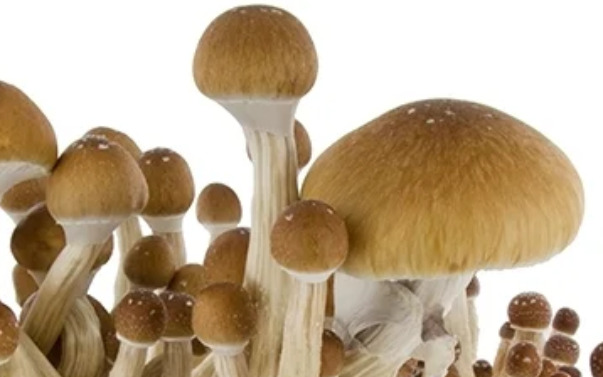
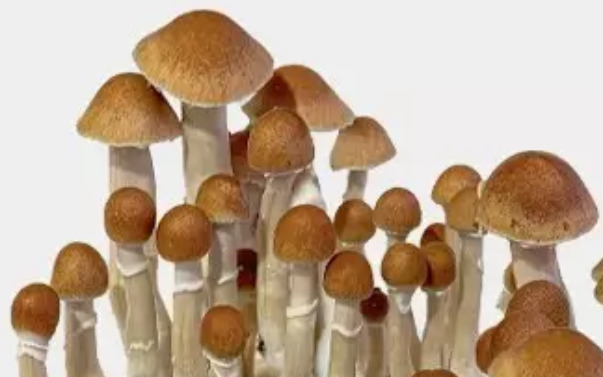
Short answer: McKennaii is a shop trade name for material sold as Psilocybe Cubensis (Earle) Singer. It is not a separate species, a published variety, or a recognised variant. Sellers say it honours the writer Terence McKenna, but that is a naming claim, not evidence that he created or collected it, and the origin accounts conflict. Under a microscope, a sample shows the spore characters of P. cubensis.
In this guide
- What McKennaii is (and isn't)
- Taxonomy
- What is documented and what is lore
- Spore traits
- Origin claims, source by source
- Names and spellings
- Identifying it, and what a microscope can't tell you
- Examining a slide
- Mushly products
- Legal note
- References
- FAQ
What McKennaii is
McKennaii is one of many named lines of Psilocybe cubensis in Mushly's all-strains library. Because every one of these lines belongs to the same species, the most useful thing a McKennaii sample can teach you is what P. cubensis looks like up close. For the difference between a species and a trade name, see our species vs strain primer and the Psilocybe cubensis species guide.
"McKennaii is a trade name for Psilocybe cubensis, not a species. Conflicting origin claims, the Golden Teacher question, species-level spore traits, and what a microscope can show."


Taxonomy
| Rank | Entry |
|---|---|
| Kingdom | Fungi |
| Phylum | Basidiomycota |
| Class | Agaricomycetes |
| Order | Agaricales |
| Family | Placement varies by source: Index Fungorum, Species Fungorum and NCBI list Agrocybaceae, while many other references use Hymenogastraceae |
| Genus | Psilocybe |
| Species | Psilocybe cubensis (Earle) Singer, Sydowia 2(1-6): 37 (1948) |
| Basionym | Stropharia cubensis Earle (1906) |
| Trade name | McKennaii (informal) |
Species records: Index Fungorum 290107, the Species Fungorum synonymy and NCBI Taxonomy 181762. None of them lists McKennaii or McKenna. A label like this records where a culture came from. It is not a taxon.
What is documented and what is lore
| Question | Status |
|---|---|
| Is McKennaii a species or published variety? | No. The only formal name is Psilocybe cubensis. |
| Spore size and shape | Published for the species only, with no McKennaii-specific measurements. |
| Does it honour Terence McKenna? | Sellers say so. That is a naming claim, not a biography or a collection record. |
| Who made it, where, and from which parents | Accounts conflict. No source names a parent strain. |
| Is it Golden Teacher under another name? | One seller-side quote says so, citing genomic sequencing. Unverified. |
Spore traits
Short answer: the published measurements describe the species, not this name.
Singer and Smith's 1958 Mycologia monograph (Mycological investigations on Teonanácatl) describes P. cubensis spores as:
- Size: 11.5-17.3 × 8-11.5 × 7-9 µm
- Surface: smooth, with a thick, complex wall
- Apex: truncate, from a distinct apical pore
- Colour in a mountant: dark yellow brown in KOH, dark olive brown in NH4OH
The KOH colour is a mountant colour, not a spore-print colour. The paper does not mention McKennaii or any collector. Guzmán et al. (2012) give a second species-level range of (12-)13-15(-17) × 8-10(-11) × 7-9 µm. No published paper that uses the trade name McKennaii is known, so the shop descriptions of cap and print colour are not cited here.
Origin claims
Short answer: none of these sources is a paper, and they disagree on who made it and how.
| Source | What it says |
|---|---|
| DoubleBlind | A strain of P. cubensis named after Terence McKenna. Two rumours, truth unclear: it was first developed from a spore print found in his collection after his death in 2000, or (per mycologist Caine Barlow) it was developed by a cultivator in the Netherlands and named in his honour, or just for marketing. Barlow says genomic sequencing supports the latter and suggests McKennaii is essentially Golden Teacher with a marketing name. The sequencing study is not named. |
| Magic Mushroom Institute | Named after McKenna but not made by him or grown from his mushrooms. Calls the estate spore-print story the romantic version and says no documented chain exists. A likelier version: a Dutch cultivator stabilised a cubensis line in the early 2000s and named it as a tribute or as marketing. |
| Zombie Myco | Named in honour of McKenna. Not from the wild but a lab-cultivated hybrid of unknown parents, developed after his death, with no genetic input from McKenna himself. |
| Mushroom Clubhouse (strain list) | "Supposedly a PE hybrid or cross by Terence McKenna," and little other credible information. The only source here that says he made it, marked as supposed, and it contradicts the two above. |
| Sporeworks | Named in honour of Terrence McKenna (its spelling). Origins uncertain and strain origin unknown. Says the name appeared in Europe and the United States nearly twenty years ago, which is a claim about when the label appeared, not where it was collected. |
A creator, a country, a print and a parent on a shop or magazine page are that page's claim. The estate spore-print story, a Dutch cultivator, an unknown lab hybrid, and a supposed Penis Envy cross are different accounts, so we do not combine them. "Named in honour of" does not mean McKenna created or collected the culture.
Names and spellings
- McKennaii is the strain spelling used by every source here. No source using McKennai or McKennii as the trade name is known.
- McKenna is the surname of the person the label is said to honour. It is not a second spelling of the strain.
- Terence vs Terrence: five sources spell the person Terence. Sporeworks spells it Terrence. That is a spelling of a person's name, not of the strain.
- Dennis McKenna appears on one source only, as Terence's brother in a sentence about a book. No source says he collected this strain.
- Mexicana (Psilocybe mexicana) is a separate species, not a spelling of McKennaii.
Identifying it
Short answer: microscopy supports a species-level note, not a pedigree.
A microscope can compare spores with the published species description. It cannot read a catalogue name, a person or a parent off a spore.
- What a match shows: spores near the Singer & Smith range, smooth, with a thick wall and a truncate apex with a germ pore, support P. cubensis as the species to compare.
- What it cannot show: who created the culture, a Dutch cultivator, an estate spore print, a lab hybrid, or a Penis Envy cross. It cannot show whether McKennaii is Golden Teacher under another label, and it cannot show chemical content.
- Look-alikes: other Psilocybe species have overlapping spore traits (Ramírez-Cruz et al. 2013). Never identify a wild mushroom from photos or one character alone.
- Records: because the name covers whatever each seller supplies, write down the exact label, supplier, format and date for every sample.
Examining a slide
Follow the general method in our Golden Teacher guide and the mushroom spores guide, and then:
- Measure at least 20 spores (length × width) and record the magnification and mountant.
- Note the germ pore, the wall, and the spore shape in face and side view.
- Record the colour in the mountant and the print colour separately.
- Write down the exact vendor label, source and date.
- Remember the limit: a fit to P. cubensis does not prove the McKennaii label.
Mushly products
Mushly does not currently sell a product named McKennaii. To study related P. cubensis lines, browse our spore syringes for microscopy. Sporeworks lists its own McKennaii syringe as out of stock. That is that vendor's status, not Mushly's.
Legal note
Mushly offers spores for microscopy, taxonomy, and mycological research. Laws on spores, and on psilocybin-containing mushrooms, differ by country and by U.S. state, and cultivation of psilocybin- or psilocin-containing species is illegal under U.S. federal law and in many other jurisdictions. Check the law where you live before ordering.
Browse spore syringes · Strain library
References
- Index Fungorum 290107; Species Fungorum synonymy; NCBI Taxonomy 181762
- Singer, R. & Smith, A.H. (1958), Mycologia 50: Mycological investigations on Teonanácatl
- Guzmán et al. 2012, Mycotaxon 119: 65-81
- Ramírez-Cruz et al. 2013, Canadian Journal of Botany
- Origin claims (not papers, not verified): DoubleBlind; Magic Mushroom Institute; Zombie Myco; Sporeworks; Mushroom Clubhouse strain list




What is McKennaii?